First published on August 19, 2026 • Last updated on August 19, 2026
This page may contain affiliate links; if you purchase through them,
we may receive a small commission at no extra cost to you.
Even though it separates two countries on a map today, the Rumichaca border crossing between Ecuador and Colombia is surprisingly young, which is why Jacquie treats this less like a practical crossing guide and more like a love letter to the shared identity this line was never quite able to split in two. Jacquie writes this piece for an Ecuadorian audience, finding the border crossing simple to navigate. If you’re not Ecuadorian or Colombian and plan to cross on your own, check current requirements before you travel.
Crossing the Rumichaca International Bridge
Crossing the Rumichaca International Bridge — the border crossing between Colombia and Ecuador — wasn’t just about switching countries. It was the start of a trip that isn’t measured in kilometers, but in revelations.
From August 25 to September 7, southern Colombia welcomed around 55 travel journalists from countries including Argentina, Brazil, Mexico, Spain, the United States, Peru, Ecuador, Chile, Uruguay, Bolivia, Panama, and the Dominican Republic, as part of the 10th Open Passport Award and the 14th World Congress of Tourism Journalism. But let’s be honest: beyond the agenda, the panels, and the credentials, the truly powerful part happened off the program.
Because what I lived wasn’t just a trip. It was realizing something that had always been there, but that I had never seen so clearly: the border between Ecuador and Colombia doesn’t divide — it reveals.

When We Were One: Roots That Still Breathe
Long before Ecuador and Colombia existed as countries, long before passport stamps or immigration lines, this territory already had life, history, and meaning. Here were the Pastos, the Quillacingas, the Caranquis. People who didn’t ask permission to cross mountains because, simply, there was nothing to cross. Everything was theirs. Everything was one.
They shared corn, potatoes, bartering. They shared rituals, festivals, ways of seeing the world where the land wasn’t a resource, but a living being. There were paths. Not borders.
And the interesting thing is that these traditions didn’t stay in the history books. They are still taking place.
Between Tulcán and Ipiales, that heritage isn’t a simple concept: it’s something you feel. It’s in how they talk to you, how they serve your food, how they include you without asking where you’re from.
The border is relatively recent compared to the age of that shared identity.

Crossing (Almost) Without Noticing: A Border That Flows
Here’s one of those things that sounds like a technical detail, but actually says a lot more.
Ecuador and Colombia have a binational agreement that allows border transit in specific zones without strict migratory control for short stays. Translated into real life: Ecuadorians and Colombians can cross, move around, eat, come back… almost like switching neighborhoods.
From Ecuador you can enter Colombia and travel as far as Ipiales, and even Pasto, under certain local conditions.
And from Colombia you can cross into Tulcán and continue on to Ibarra.
But beyond the legal framework, which does exist, what really matters is this: life here doesn’t stop at a line. Neither do the people.
(If you’re planning to cross on your own, here are the most up-to-date details on the process: how to cross the Colombia–Ecuador border.)

La Cocha: Realizing You Don’t Have to Go That Far
One of those moments that slows you down (and humbles the traveler’s ego a bit) was arriving at Laguna de la Cocha. They call it the “Venice” of this region, but without the pretension. Without the crowds. Without the poses.
And there, in that half-cold, half-magical silence, I understood something that sounds obvious but isn’t: sometimes we search for the extraordinary by crossing oceans… when we have it three hours away by car.

Guachucal: Real Cold, Warmth You Can Feel
In Guachucal, the cold isn’t “oh, a little chilly”: it goes beyond an Achichay (or Achachay, as we say in Ecuador). The reality is that the cold bites there.
But something curious happens too: the lower the temperature drops, the warmer the people get.
There, among the mountains, I ended up dancing to an Ecuadorian sanjuanito — yes, Ecuadorian — as naturally as if it were a popular festival back home. “Pobre corazón entristecido,” performed by the group Cuanpe Escuela Artística. And in that moment I internalized something crystal clear: music has no borders here, and neither does identity.
And of course… the key moment arrived: helado de paila, the ice cream with no passport.
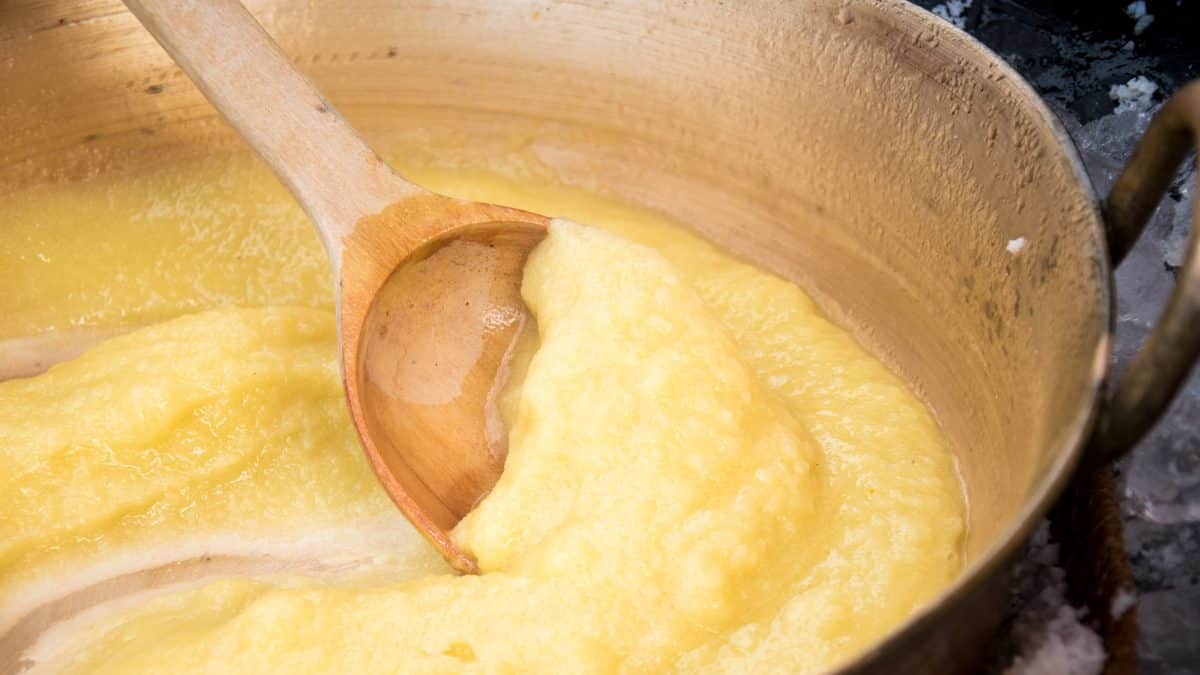
Trying a helado de paila in Guachucal was just as delicious as trying it in Ibarra: same technique, same logic, same tradition. Fresh fruit, a copper paila, ice, constant movement… and there it is: memory turned into dessert.
Two countries, three hours apart… and the exact same flavor.
Hearths Without Borders (Because Here, You Eat With History)
If there was still any doubt that we never stopped being one here, the food takes care of erasing it.
Hornado pastuso takes center stage: golden, crispy, powerful. It’s there in Tulcán too, with that deep flavor you can’t improvise. The details change: in Nariño they add potatoes, mote, even canguil (toasted corn) and peanut ají; in Ecuador the canguil disappears, but the peanut ají becomes almost sacred, it’s so essential.
Cuy (guinea pig) remains a dish reserved for important occasions. It’s not “typical food” for tourists: it’s ritual, it’s celebration.
Chicha de maíz isn’t just any drink: it’s the ideal companion if you want a genuine culinary experience. But you also have the option of trying the Cumbalazo, a cold drink that hits straight to the brain.
And when the cold sets in, the allies appear: el Chapil in Nariño, a strong, no-nonsense spirit; puntas or Norteño on the Ecuadorian side. Here, liquor isn’t trendy, it’s context, and a big help for those most sensitive to the cold or the altitude.

Tulcán: Where Even Memory Is Art
The José María Azael Franco Cemetery in Tulcán isn’t just a cemetery.
It’s wild (in the best sense). Perfectly carved cypress sculptures, admirable artistic forms, symmetries that make you wonder whether you’re in a park or a museum.
But deep down, it all comes back to the same thing: memory, ancestors, connection. It’s a historical treasure that draws in locals and outsiders alike, and makes people curious to visit: it was declared Cultural Heritage of Ecuador by the Ecuadorian State, it’s considered one of the most beautiful cemeteries in the world, and it’s a unique reference point for the art of topiary (tree sculpture), especially in cypress.

Music That Doesn’t Ask Permission
In Pasto, hearing La Guaneña wasn’t just hearing a song. It was understanding that there are things that need no explanation. That simply move through you. Because when something is part of your identity, it doesn’t matter what country you’re in: you recognize it. And it recognizes you.
Being Transformed Without Going That Far
This trip stirred something in me. Not because I went far away, but because I understood better what I already had close by. Because I saw that our roots are shared, that our differences are just details… and that the border is more mental than real.
Today I’m clear on something: in this part of the world, Ecuador and Colombia aren’t two separate stories. They’re the same story… told with two accents.
And at Rumichaca, that line that seems to divide actually does the opposite: it unites us, makes us siblings, complements us, and invites us to visit each other more often. As I said before, sometimes we search for the extraordinary by crossing oceans… when we have it three hours away by car.