

First published on July 29, 2026 • Last updated on July 29, 2026
This page may contain affiliate links; if you purchase through them,
we may receive a small commission at no extra cost to you.
The cold water filled my mouth as I tipped my head back, cup gripped between my teeth. I was mid-step, dressed in the traditional outfit of a dancer of Cuemal, performing for my fellow tourists. I was on stage and enjoying it. Which is unusual for me. I generally do not like dance performances staged for tourists, too often the worst version of community tourism, an act performed for an audience. But today felt different.
Arriving in Cuemal
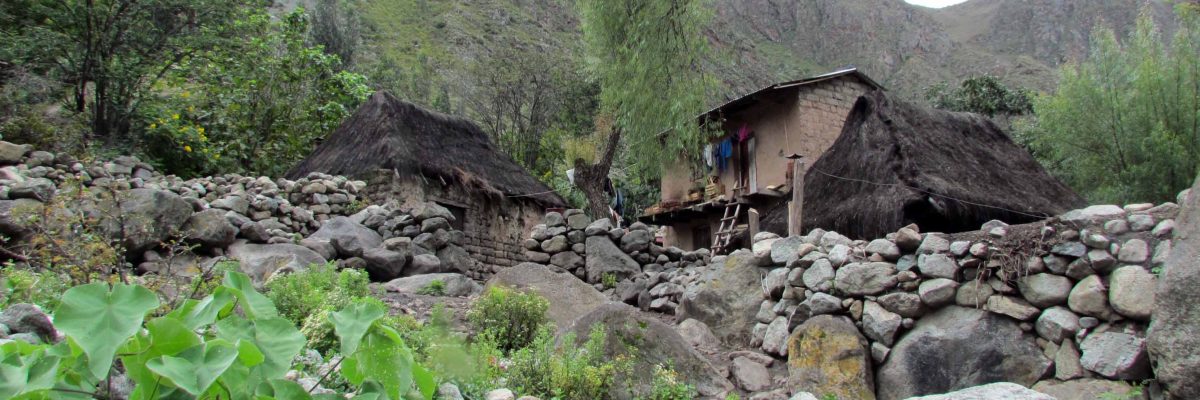
We were visiting the Andean community of Cuemal, a farming village of adobe houses set at nearly 2,900 meters (about 9,500 feet) in Peru’s Chachapoyas highlands. It’s one stop on a larger ecomuseum route that also protects the Karajía sarcophagi, funerary figures tucked into cliffside niches, and the Leymebamba Museum, created to bring income to residents of the region. Cuemal and its residents share their traditions with small groups of tourists like ourselves, invited to participate rather than only watch. Our group was small: Marilyn, our tour leader, traveling with her husband, Fran, and their son, Nahuel, plus Scott and myself.
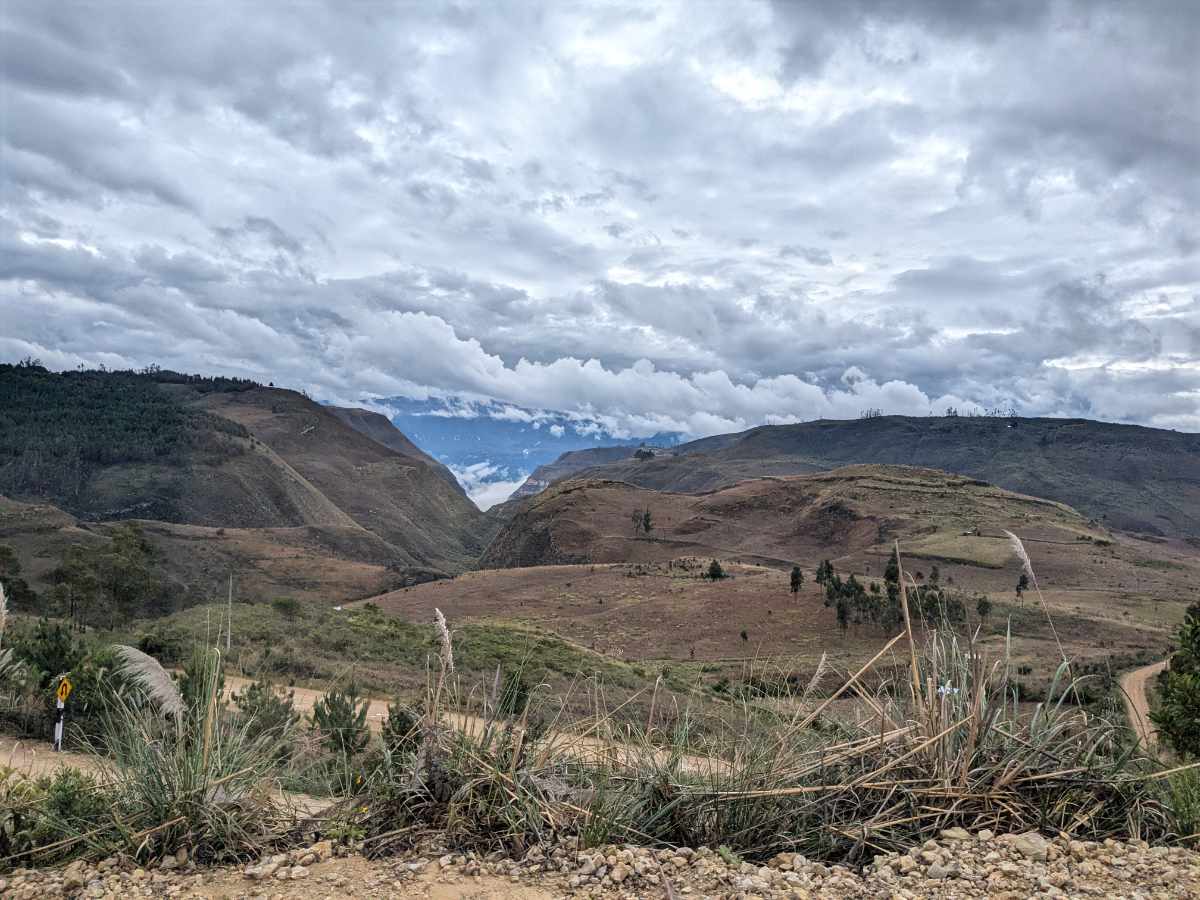
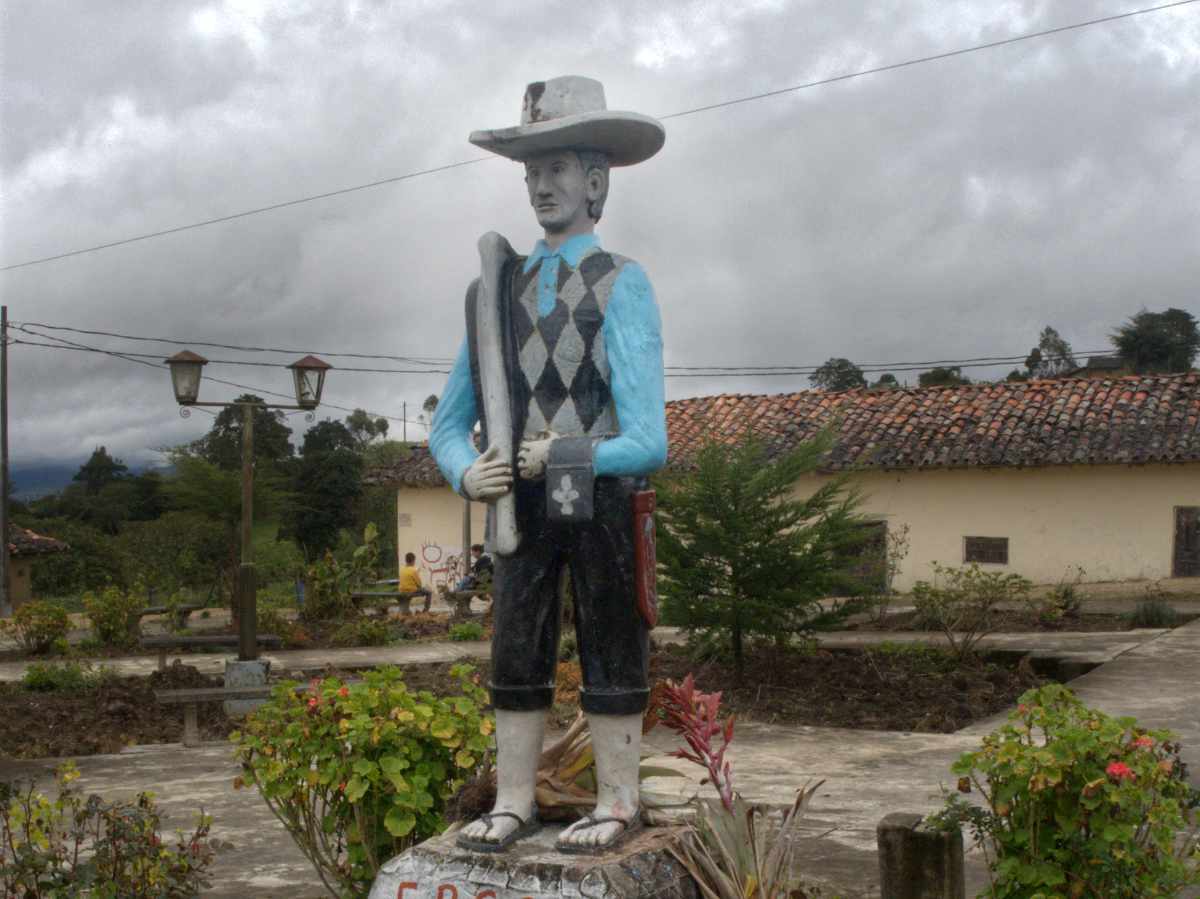
We arrived mid-morning, driving a winding dirt road to a village so high in the Andes that the peaks faded away to views of rolling hills. The buildings were low and the colors of the earth, most made of naked adobe brick but some painted a creamy white trimmed in oxblood red around the base and on the doors. We passed a large cross on the hillside before entering the village and parked on a square with a statue at its center: a tall figure we’d later learn was the founder of Cuemal, Cacique Taita Porachachi.
The Welcome
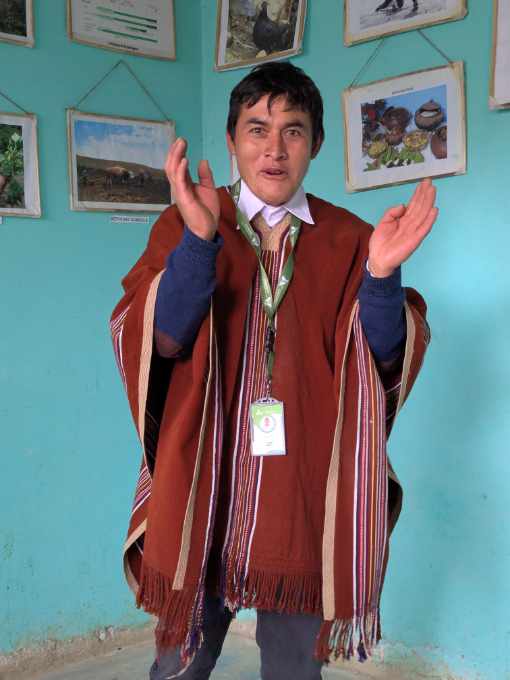
Our hosts, Anita and Dagoberto, met us at the Interpretive Center. Both were dressed for cold weather… she in a dark skirt with a woolen sweater knit in cream, chestnut brown, and black; he in work pants, a dark blue sweater over a white collared shirt, and a deep rust-colored poncho.
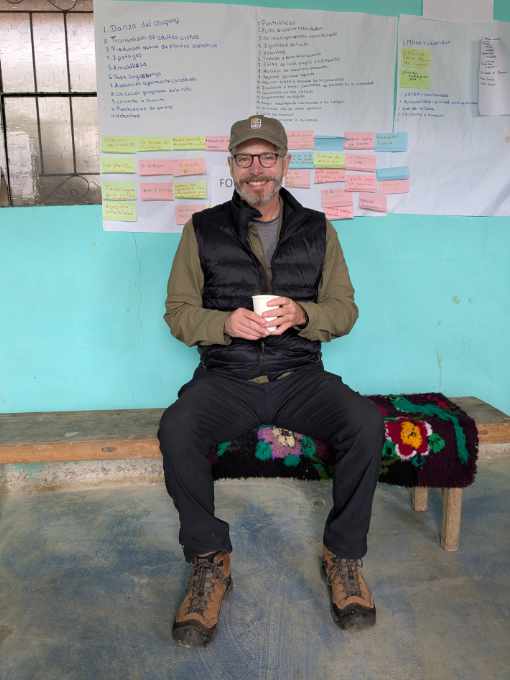
A woman named Coquito poured us hot mint tea, grown from the community’s own medicinal plants, meant to help fight off the cold and the altitude. Anita later showed me the herb garden, talking about the important medicinal plants. But I am getting ahead of myself.
We sat on the benches and listened to Dagoberto tell the story of Cuemal: how the Spanish, arriving during the conquest, found the village emptied out, its residents in hiding, everywhere except a kitchen full of guinea pigs. When the soldiers opened the door, the cuyes shrieked, and the startled conquistadors muttered, “Cuyes malos.” Bad guinea pigs. Cuy and mal knitted together into Cuemal.
The Mortero
We’re telling this a little out of order. We danced before we learned the origin of the story. For you, we’re breaking the rules and changing the steps. And the mortero is where it all begins.
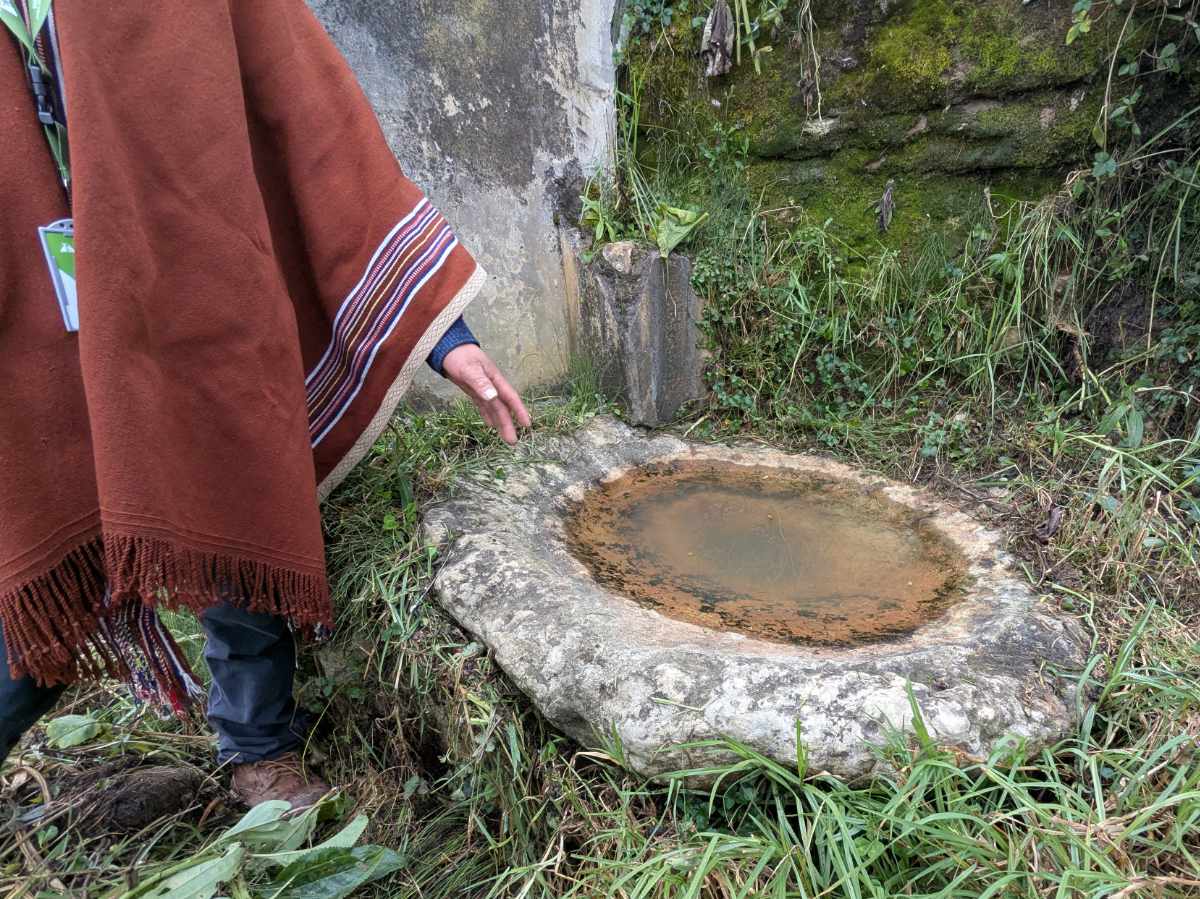
Dagoberto led us behind the Interpretive Center to the mortero, a stone basin placed where groundwater wells up out of the ground, thick marshy vegetation crowding its edges. It is so old no one is sure when it first appeared.
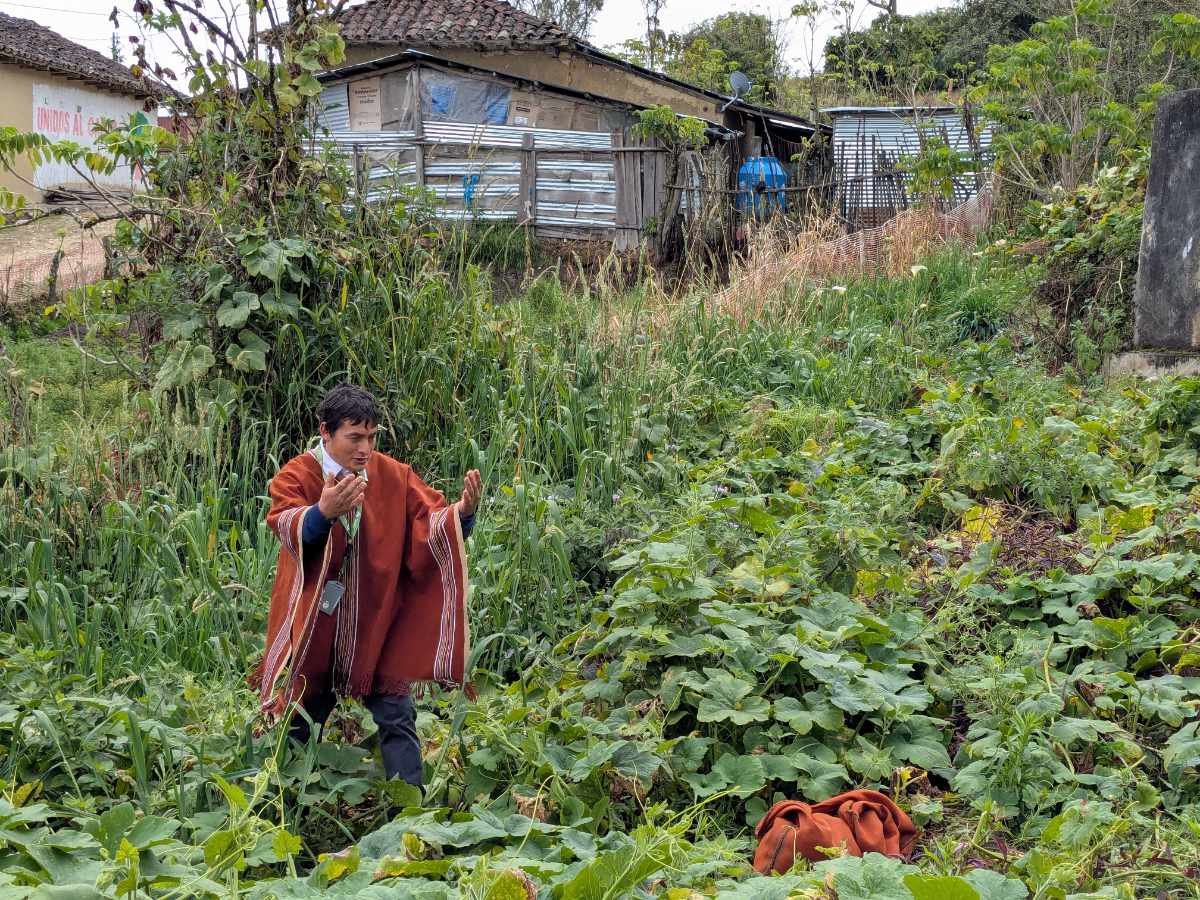
This place, he told us, is where a small, dark thrush comes to drink and bathe. When rain is about to come, the chuquiaj (pronounced choo-kee-AHJ) flies to a nearby tree and sings, praying for rain. Then it flits down to the mortero, tips its beak into the basin of water, and rubs droplets over its back using its wings, singing the entire time. Watch closely enough, Dagoberto said, and you’ll see the bird dancing.
The chuquiaj is the inspiration for the dance to come. The dancer’s costumes are split in two: waist down they represent the bird, its colors and footwork mimicked in the steps of each dancer; waist up, it’s the rainbow that often appears while the bird sings.
The Dance
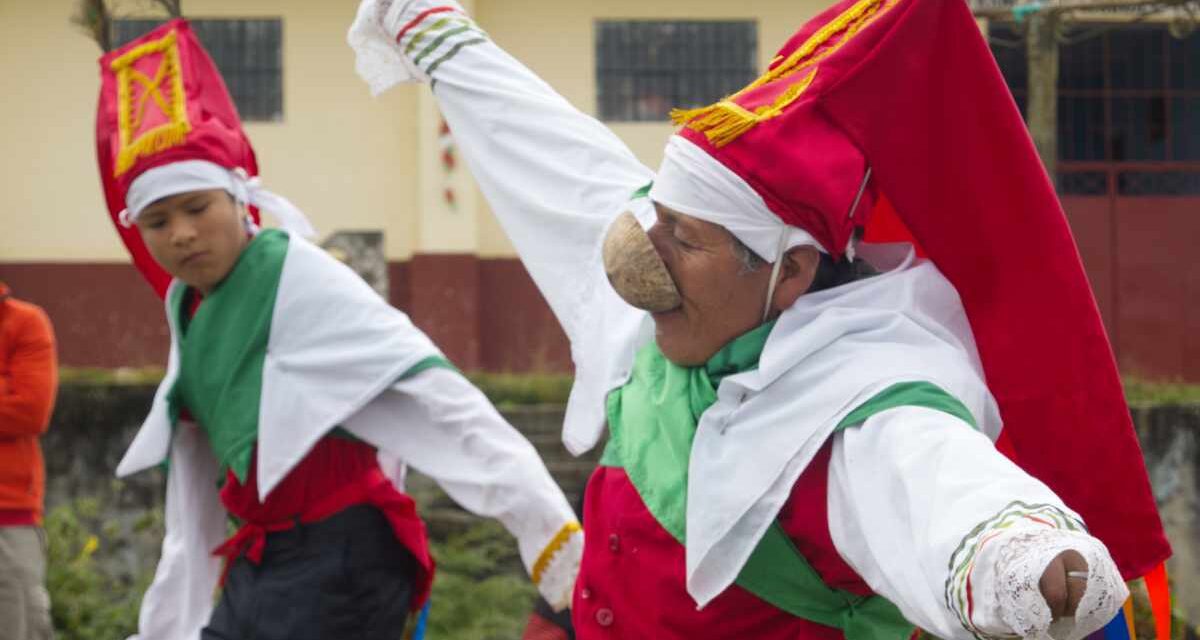
Back in front of the Interpretive Center, still wondering if the overcast sky would give way to rain (though we hadn’t heard the chuquiaj sing so we were hopeful for a dry day) we watched Señor Dagoberto lead three dancers, one older man and two young boys, with two musicians into the plaza.
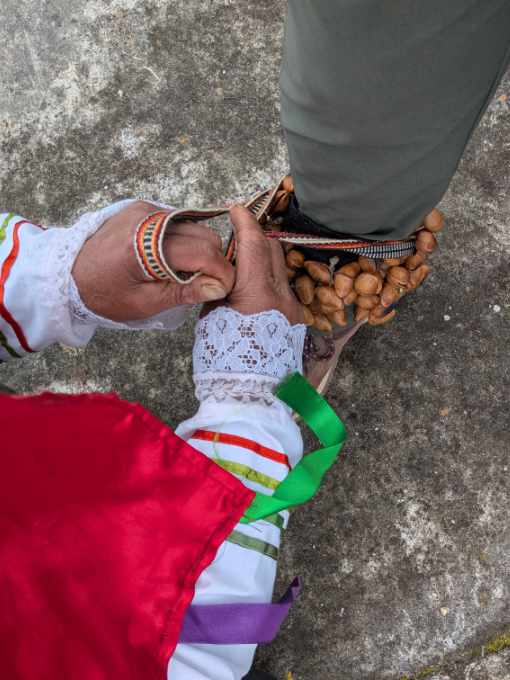
One musician held a flute to his mouth, piping out a tune while simultaneously playing a drum with the other hand. The second held a huge conch-like shell, playing it like a brass instrument. The dancers walked in steps of three, the third beat landing harder on their foot, making their anklets of deer toes percolate with sound. Cha cha CHA, cha cha CHA.
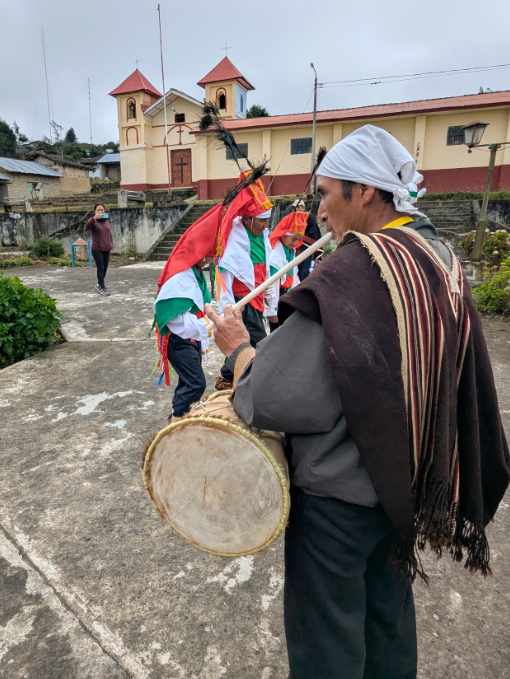
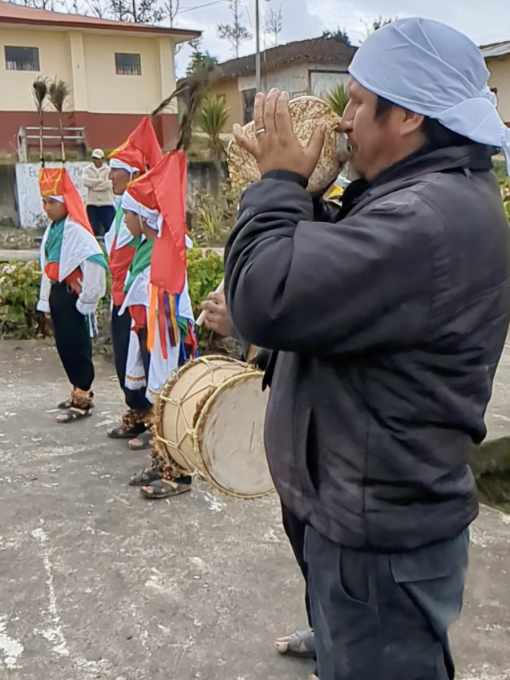
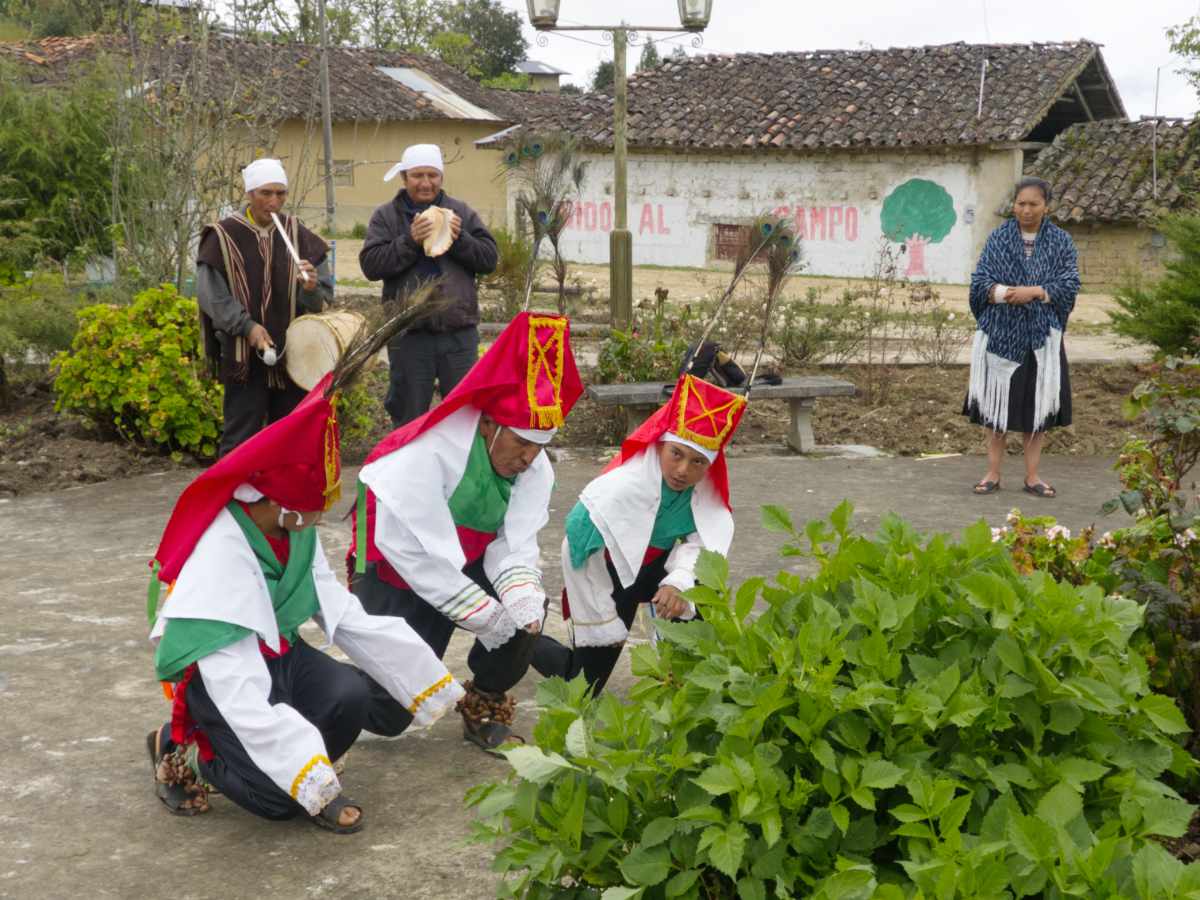
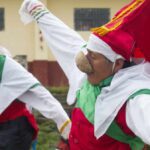
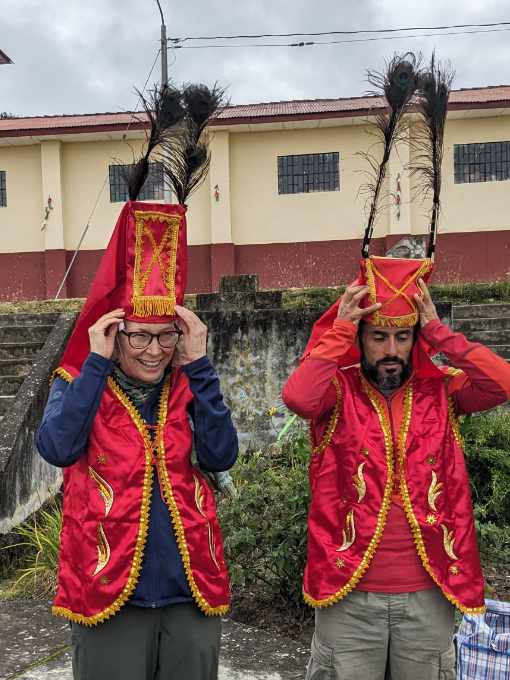
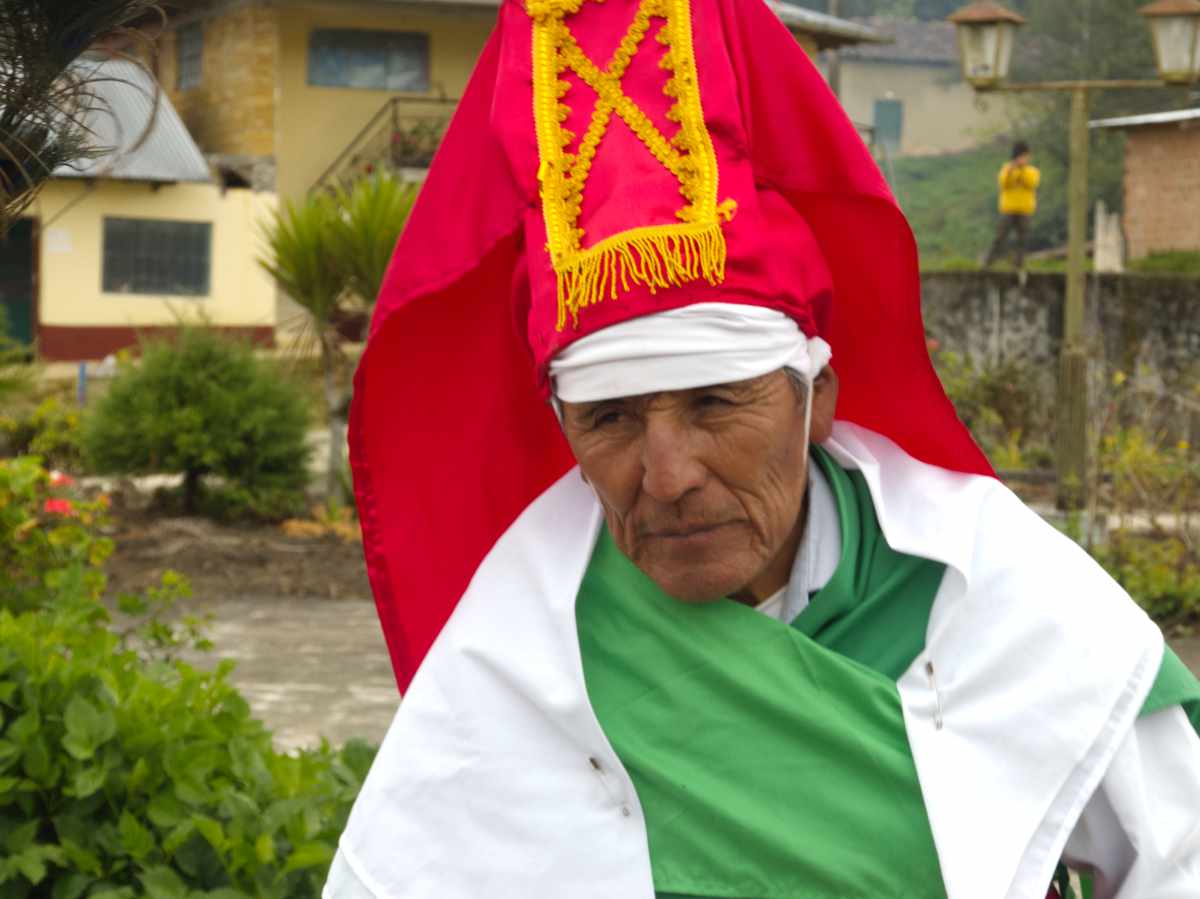
The dancers were dressed alike: leather sandals, dark black pants, red vests over white shirts, two shawls, one grass green layered under one bright white. Their headpieces rose taller than Abraham Lincoln’s stovepipe hat, satiny red fabric embroidered in gold, ribbons streaming down their backs, two peacock feathers on top.
They bowed to the statue first, then wove in and out, a circle becoming a line becoming a circle again. Someone set a small gourd bowl atop a pottery jar on the ground. The eldest dancer knelt, bent in half, arms stretched back like a bird soaring, and gripped the bowl’s rim in his teeth. Rising, still kneeling, he tipped it back, arms held high, exactly the motion Dagoberto had described at the mortero. Then he danced with the boys before dropping back to his knees, wings spread, to set the bowl down again. One more thing: balanced on one leg, face uplifted, lips pursed, he sprayed a mouthful of water into the air.
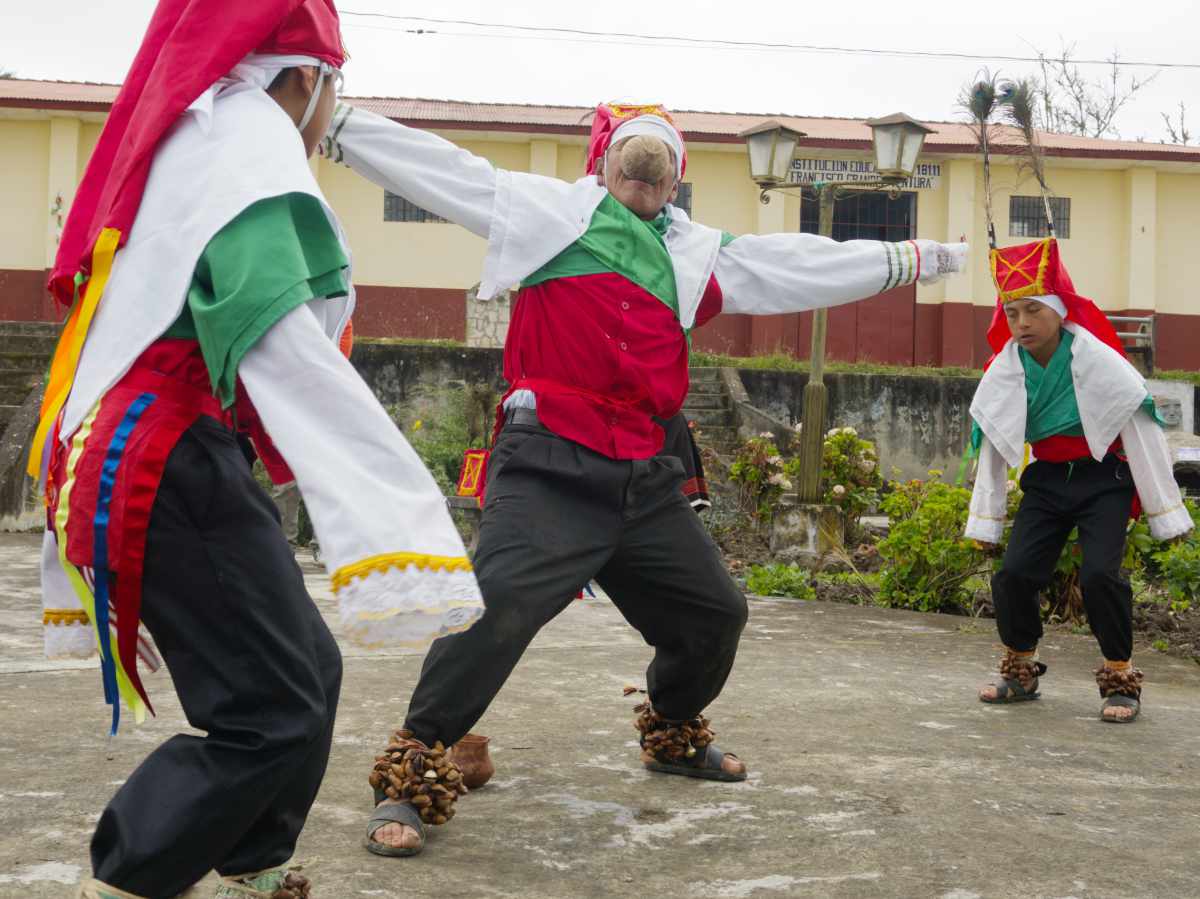
When they asked for a volunteer, Fran and I stepped up. I’ve learned that these invitations are less about performance than about saying thank you, and I wanted to say it properly. We danced with the two boys.
I took my turn first, kneeling to the ground and gave homage to chuqiaj by taking a mouthful of water. The cold hit my parched throat and I swallowed before I could get it out, so I failed to give the chuquiaj its rain. Still, pounding my foot on the hard surface until my anklets rattled took me outside of myself. I can’t know what it’s like to live in Cuemal. But I know what it’s like to dance for rain, if badly, and just once.
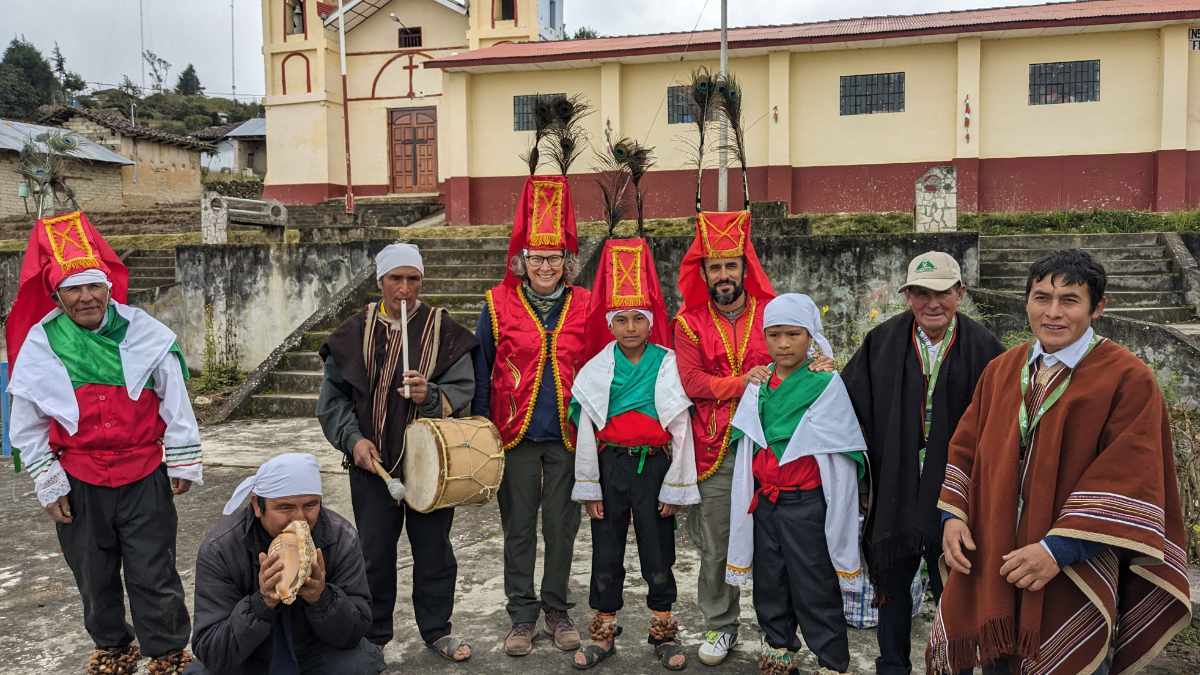
Afterward, I got the chance to talk with the eldest dancer for a few minutes. He explained why the drum has two tones: the low one, tuned to a dancer’s right foot, is called macho (male); the high one, tuned to the left foot, is hembra (female). It’s the contrast between the two voices that makes the beat. I asked how old he’d been when he started dancing. Six, he told me. And now? Sixty-two. Fifty-six years of pounding macho and hembra into that same plaza.
A Community Tour
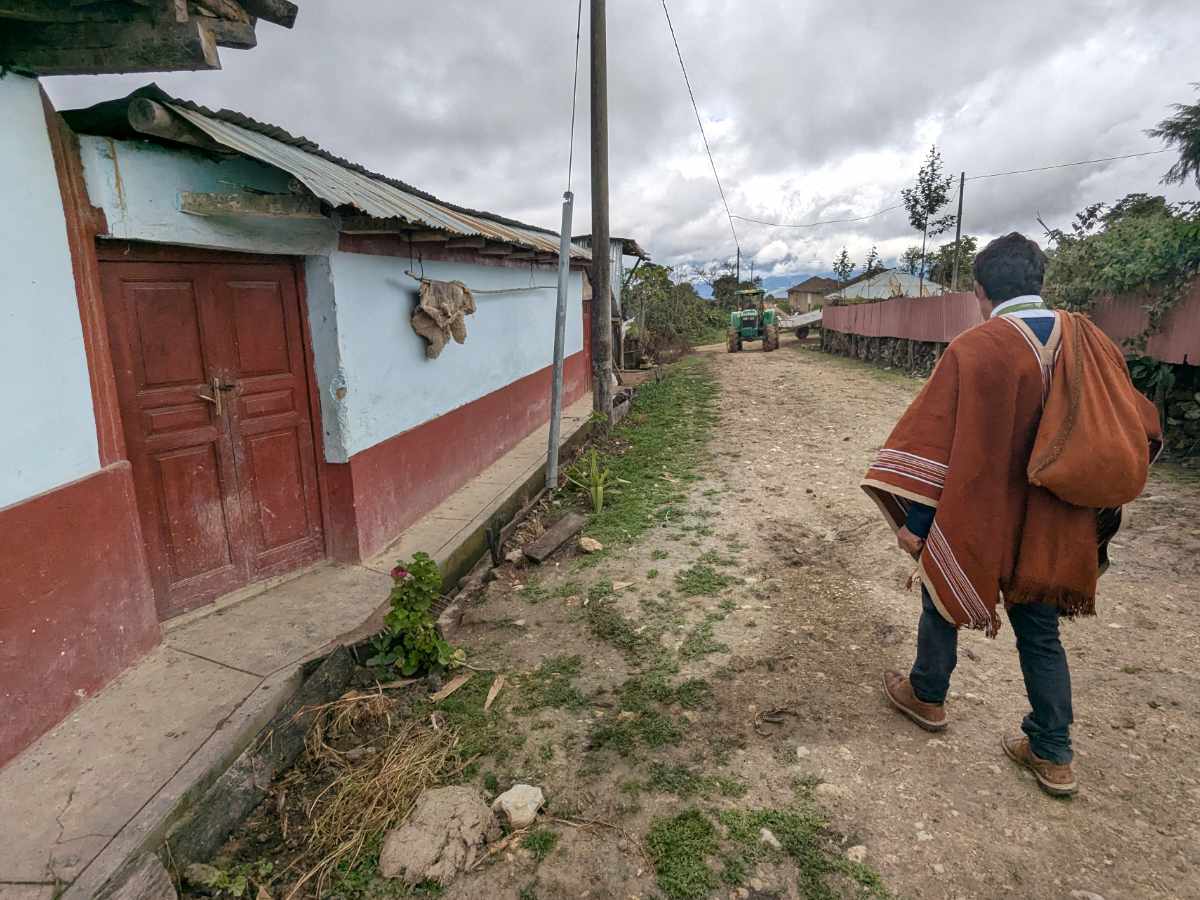
Dagoberto then walked us through a tour of the community starting with the mortero. What followed was a tour we were more familiar with, an introduction to the simple life of farmers in the Andes.
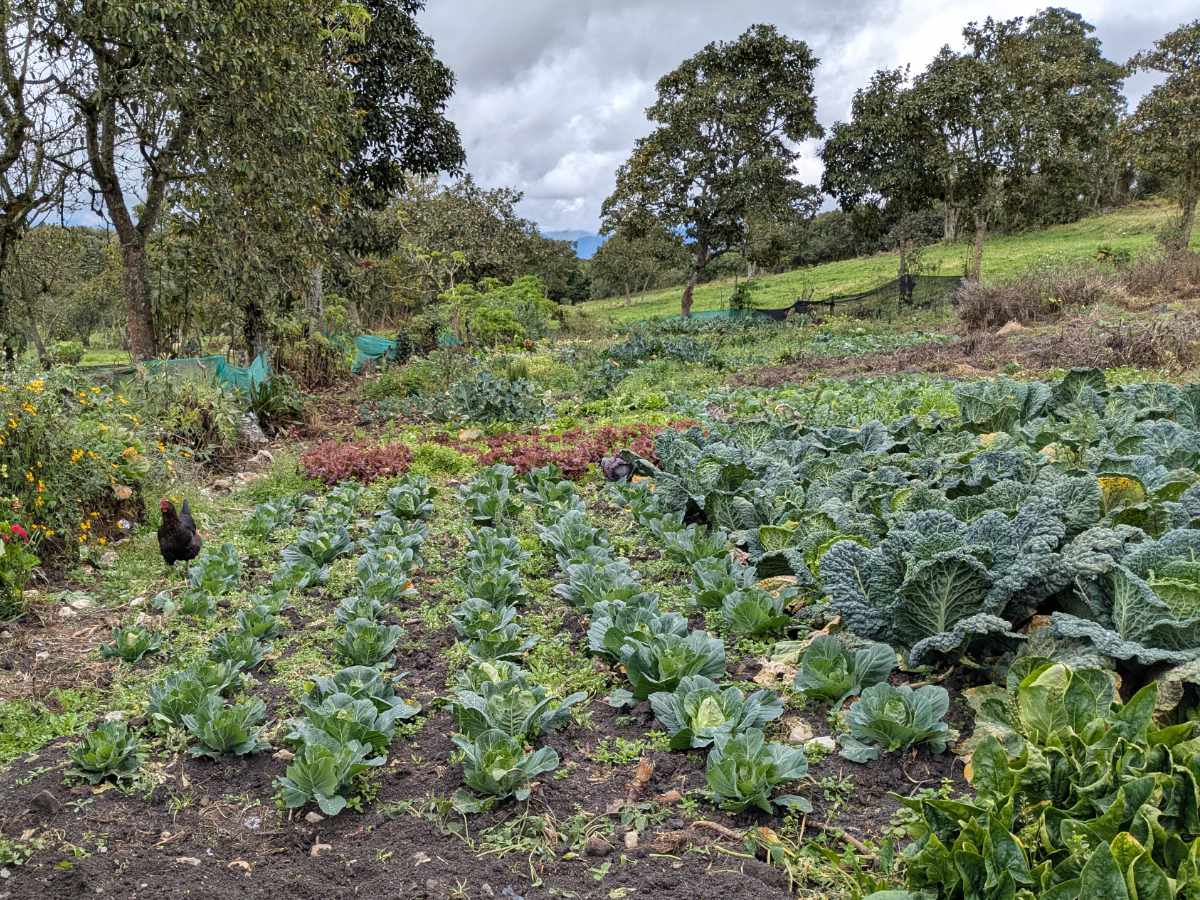
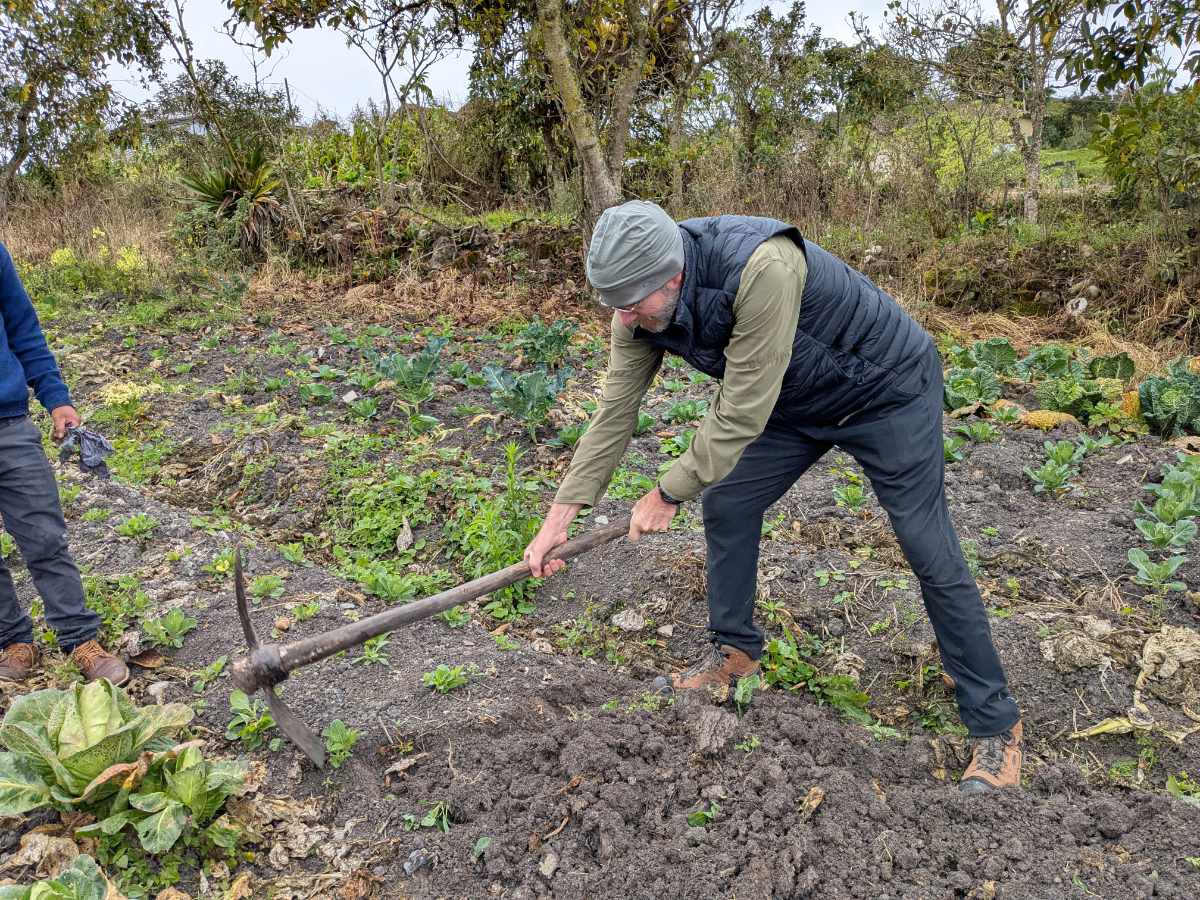
We visited Dagoberto’s market garden, and the pens where he raises guinea pigs for the table. We saw small plots of land still worked by hand, others large enough for a tractor. Scott found his opportunity to perform, turning the earth with a huge mattock and planting young broccoli shoots into the volcanic soil. And Nahuel enjoyed seeing all the different animals, the ducklings with their mama, the pigs in the far field, a lone horse, and chickens galore.
Our tour ended back at the Interpretation Center. Anita led us through the back door, out past a dining table set for lunch to the herb garden in the back. I picked fresh mint and crushed it between my fingers, taking in its familiar peppermint aroma. I learned the difference between it and yerba buena, which is more like spearmint. She introduced a few other plants before leading me back to join the others at the table.
Siete Potajes – Seven Stews
By the time we sat down to eat, we were more than ready. The village women had prepared a spread called the Siete Potajes, literally the seven pottages, though unless you grew up in England you might not know a pottage is a thick vegetable stew.
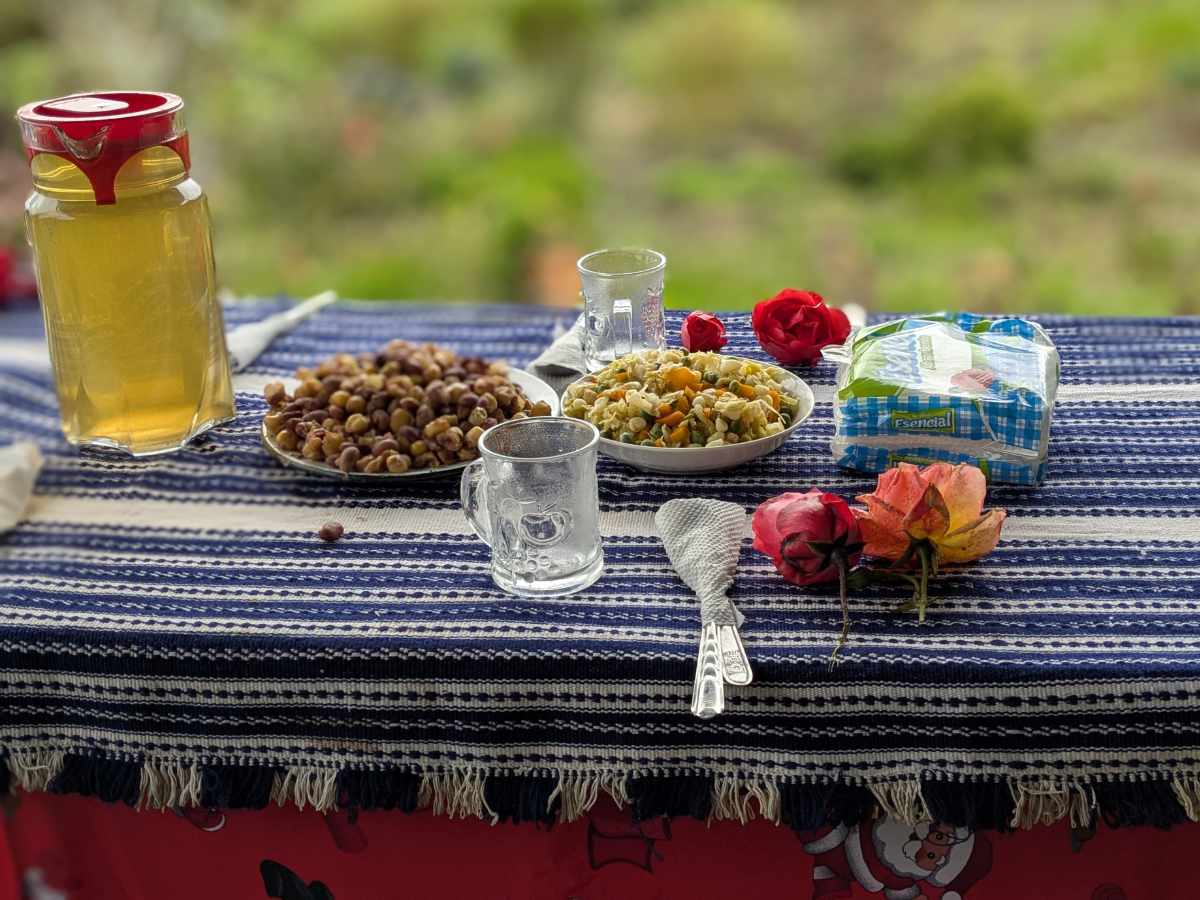
The table was set with a handwoven cloth in navy blue and white. Silverware and napkins sat beside fragrant roses, cold tea waiting to be poured into small glass mugs. A dish of beans with peeled mote sat on one plate, a salad of cabbage, peas, corn, and carrot on another. My tummy growled as my nose detected delicious aromas that reminded me of soup cooking in my Great-aunty Beryl’s kitchen.
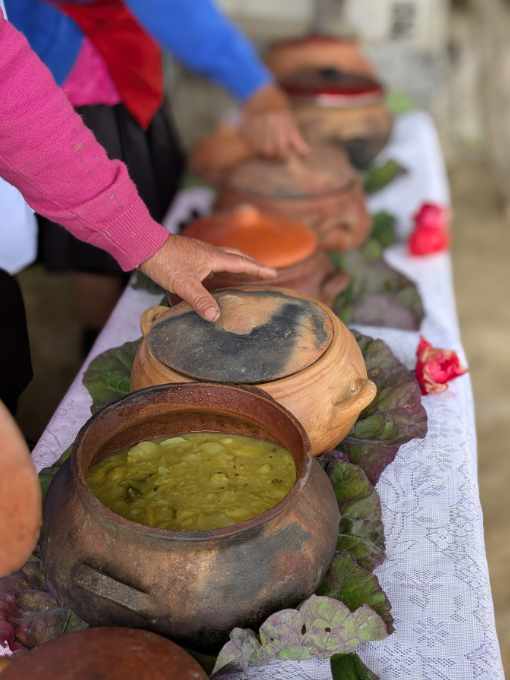
A long buffet table held large earthen pots, lids hiding their contents, three women waiting to serve us plate by plate. Looking it over, I realized the whole afternoon was sitting on that table: cabbage from the garden we’d just walked through, cuy from the pens behind Dagoberto’s cottage, tea brewed from herbs in the community’s medicinal garden, squash from the fields below the village. Never had I seen so many vegetables served in the Andes.
This was no vegetarian meal, though you could ask for only the veggie dishes. We ate a pottage full of cabbage, squash, carrots, and broccoli. “Pura verdura,”
said one of our hostesses. We ate chicken, beef, a big pot of plain rice to go with the meats, potatoes stewed with cabbage, noodles sautéed with onions and root veg, and, last, cuy garnished with peanuts. “Qué rico,” said Nahuel, deeply rolling the r in appreciation for the food on offer. I couldn’t agree more.

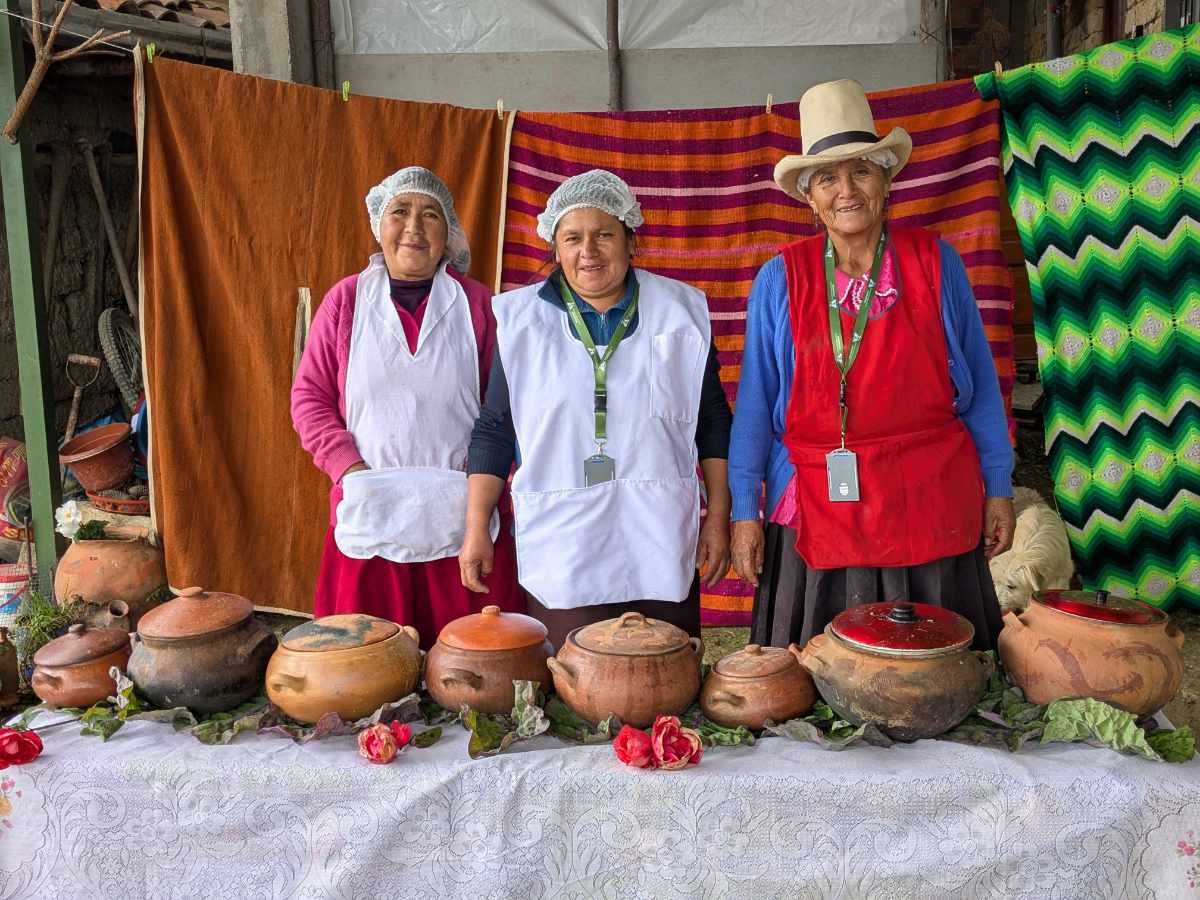
Three women stood at the buffet, proud, watching us eat. They didn’t join us, though I wish they had. We were joined instead by Dagoberto, Anita and an elder from the community dined with us, chatting animatedly with Marilyn as we worked through all the different dishes. Some of us went back for seconds, and if we’d brought containers, we would have been welcome to the leftovers too. It’s a normal practice in the Andes, guanchar in this part of Peru, packing extra food home in a container called a lapa. I’d seen the same custom before, at a Saraguro festival outside Quito: a feast isn’t only for the day it’s served, it’s meant to follow you home.
Yet instead of leftovers, I took home memories of deer toe anklets around my feet, cold water in my throat, and the warm hospitality of Cuemal.