

First published on February 14, 2026 • Last updated on February 14, 2026
This page may contain affiliate links; if you purchase through them,
we may receive a small commission at no extra cost to you.
Before visiting Karajía, we thought we had a pretty good sense of what we were going to see. Like most people, we’d seen the photographs: a small group of towering figures perched high on a cliff, their painted faces staring out over the valley.
It wasn’t until we were there—walking the trail, listening to our guide, and taking time to really look—that questions started piling up.
- What exactly are these structures?
- Why are some easy to see and others almost invisible?
- How many are there, really—and what happened to the rest?
Some of these were questions we had before arriving in Karajía. Others only made sense after we left.
Below are straightforward answers to the most common questions travelers ask—grounded in what we learned on site, conversations with local guides, and follow-up research after our visit.
What are the sarcophagi of Karajía?
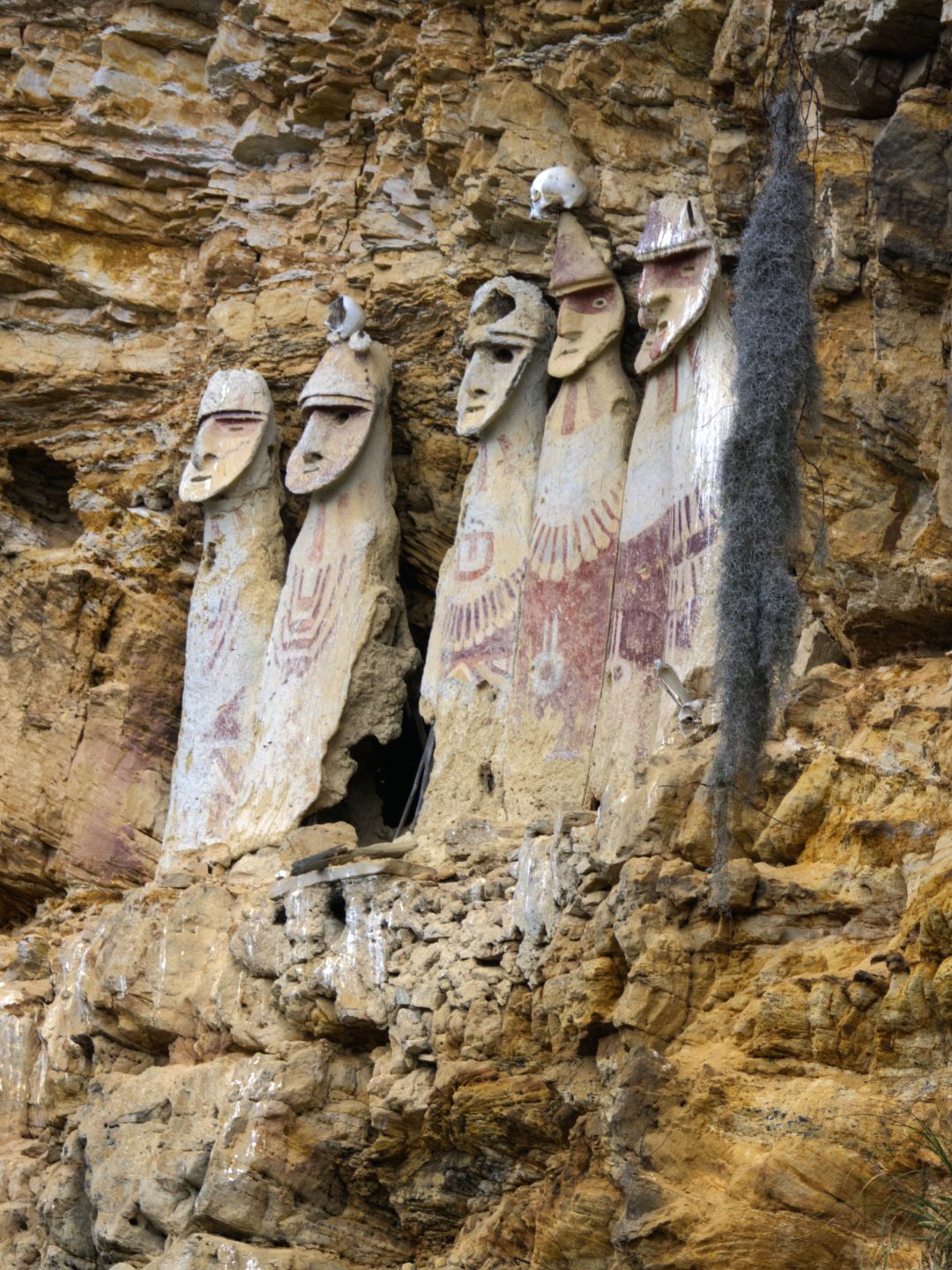
The sarcophagi of Karajía are above-ground funerary structures created by the Chachapoya culture, a pre-Inca civilization that lived in what is now northern Peru.
They are anthropomorphic—shaped to resemble the human form—and were built to hold bundled human remains along with burial items. Unlike underground graves, these structures were intentionally placed high on cliff faces, where they remain visible from the valley below.
Why are they called sarcophagi if they are not stone?
In classical archaeology, a sarcophagus refers to a stone coffin, a definition rooted in Greek and Roman traditions.
In northern Peru, however, the Spanish term sarcófago is more broadly used to describe above-ground burial containers, regardless of material. The Karajía sarcophagi are constructed from wood, reeds, clay, mud, and straw, then painted—very different from Egyptian or Mediterranean examples, but serving a similar funerary purpose.
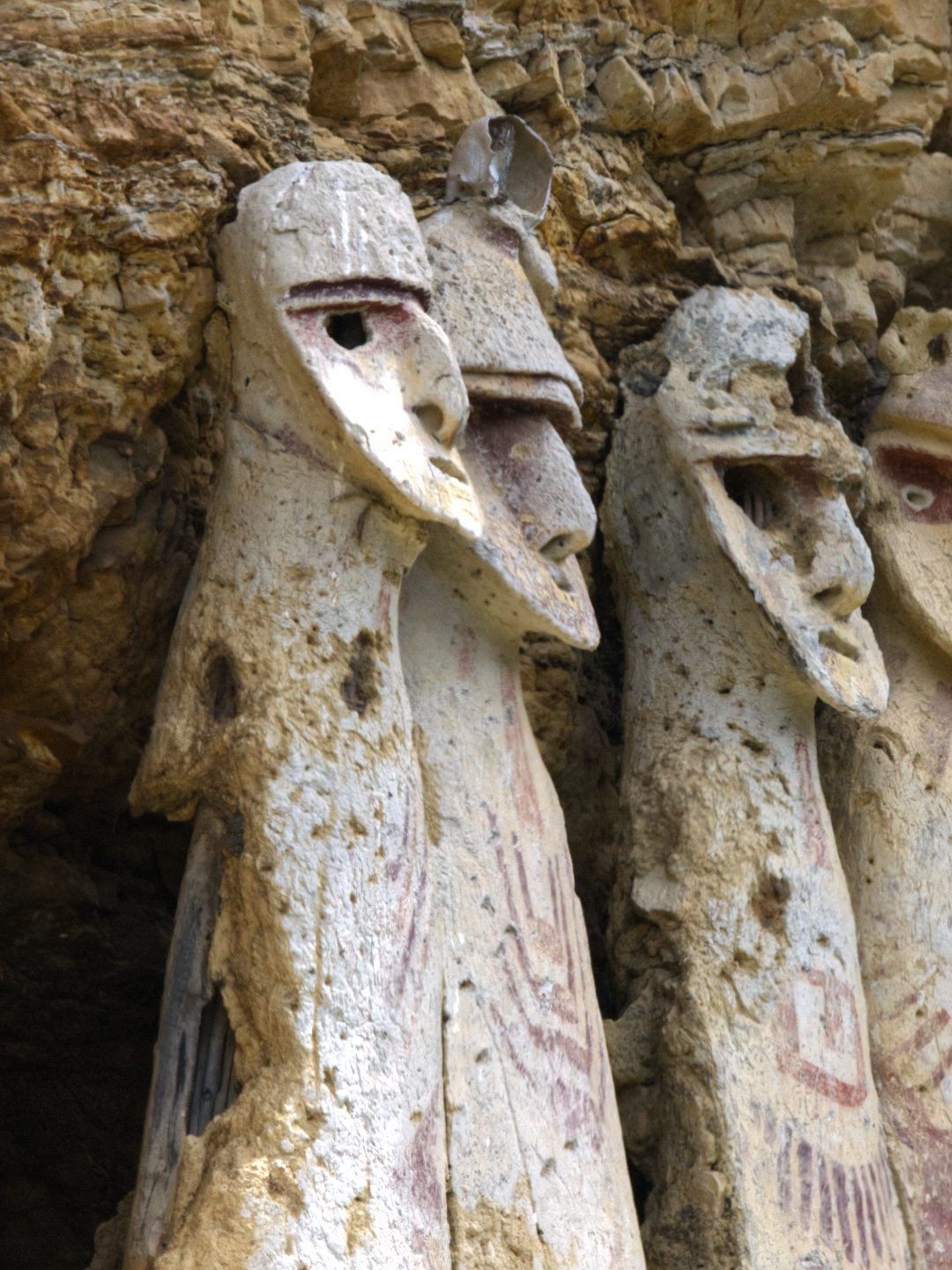
How many sarcophagi are there at Karajía?
Historically, local accounts and archaeological surveys indicate that eight sarcophagi once stood together in the main group at Karajía.
Today, six remain, with gaps marking where others were lost—primarily due to earthquakes. The second figure from the right cannot always be fully seen from all angles as it is slightly set back from the others.
It’s important to note that Karajía is not limited to this single group. Additional remains exist on the same cliff face and throughout the surrounding landscape.
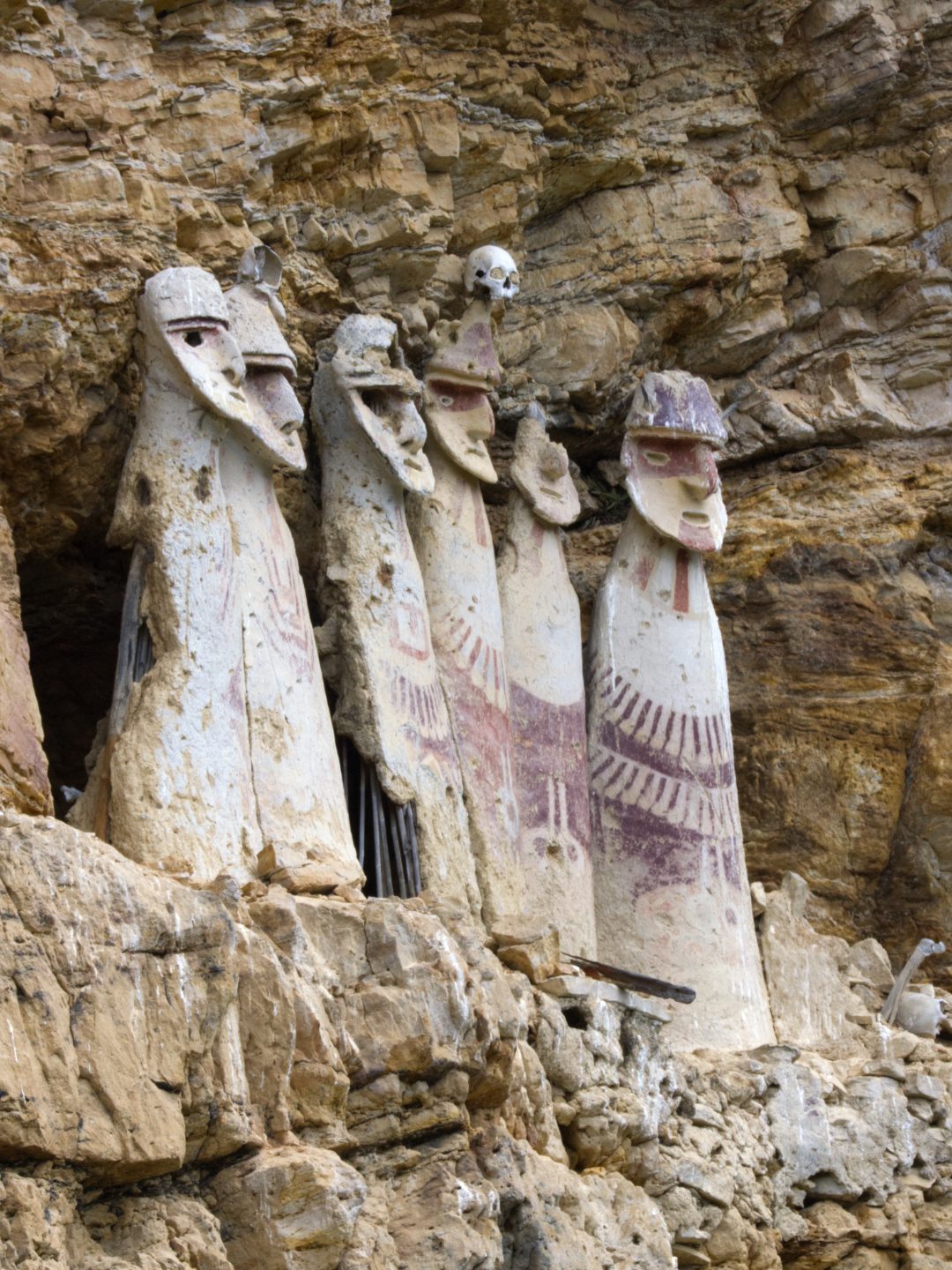
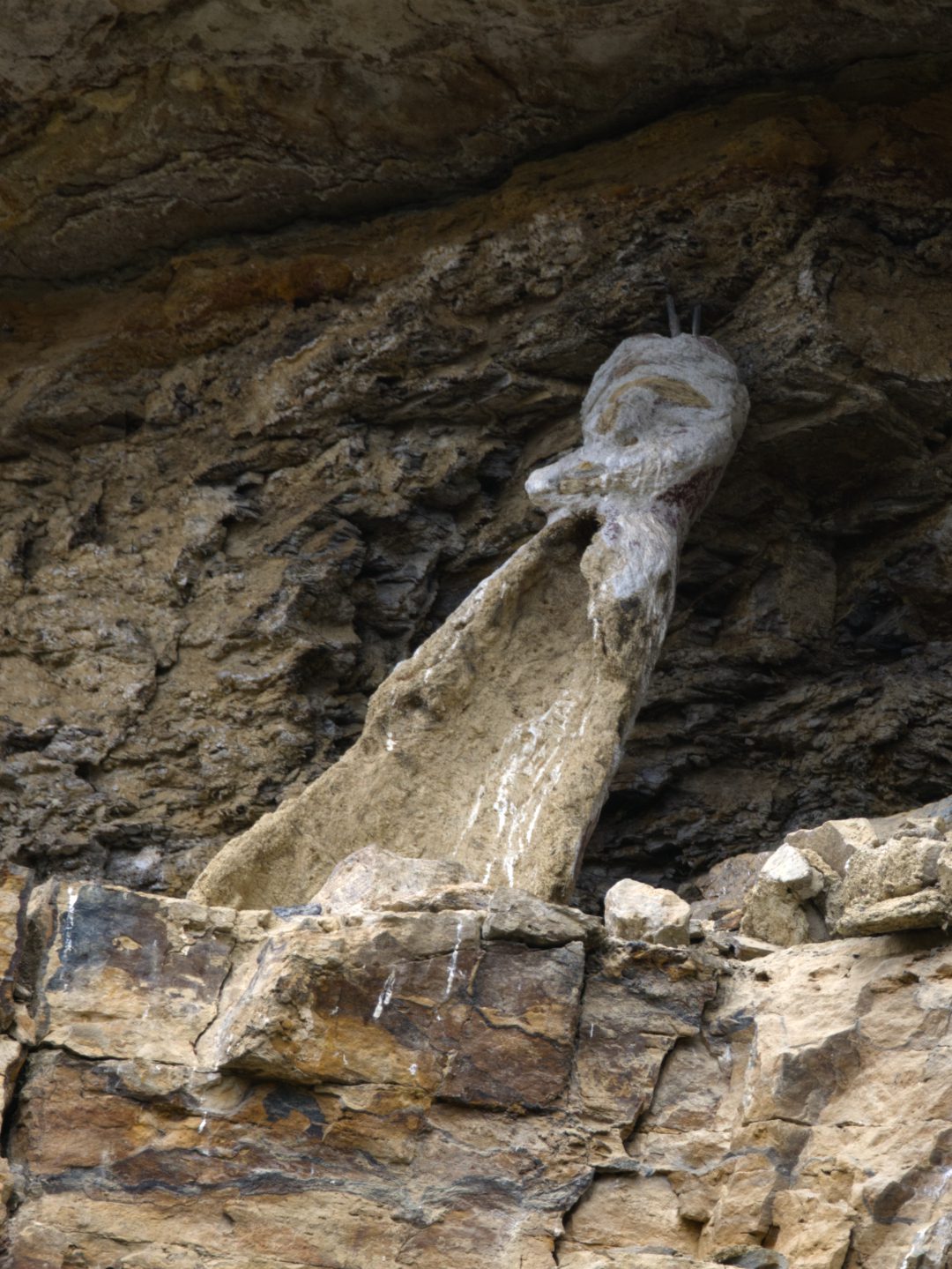
Why are some sarcophagi missing or damaged?
Several factors have contributed to the loss and deterioration of the sarcophagi:
- Earthquakes, particularly strong events in the late 20th century
- Weather exposure over centuries
- Erosion and rockfall
- Looting following early publicity of the site
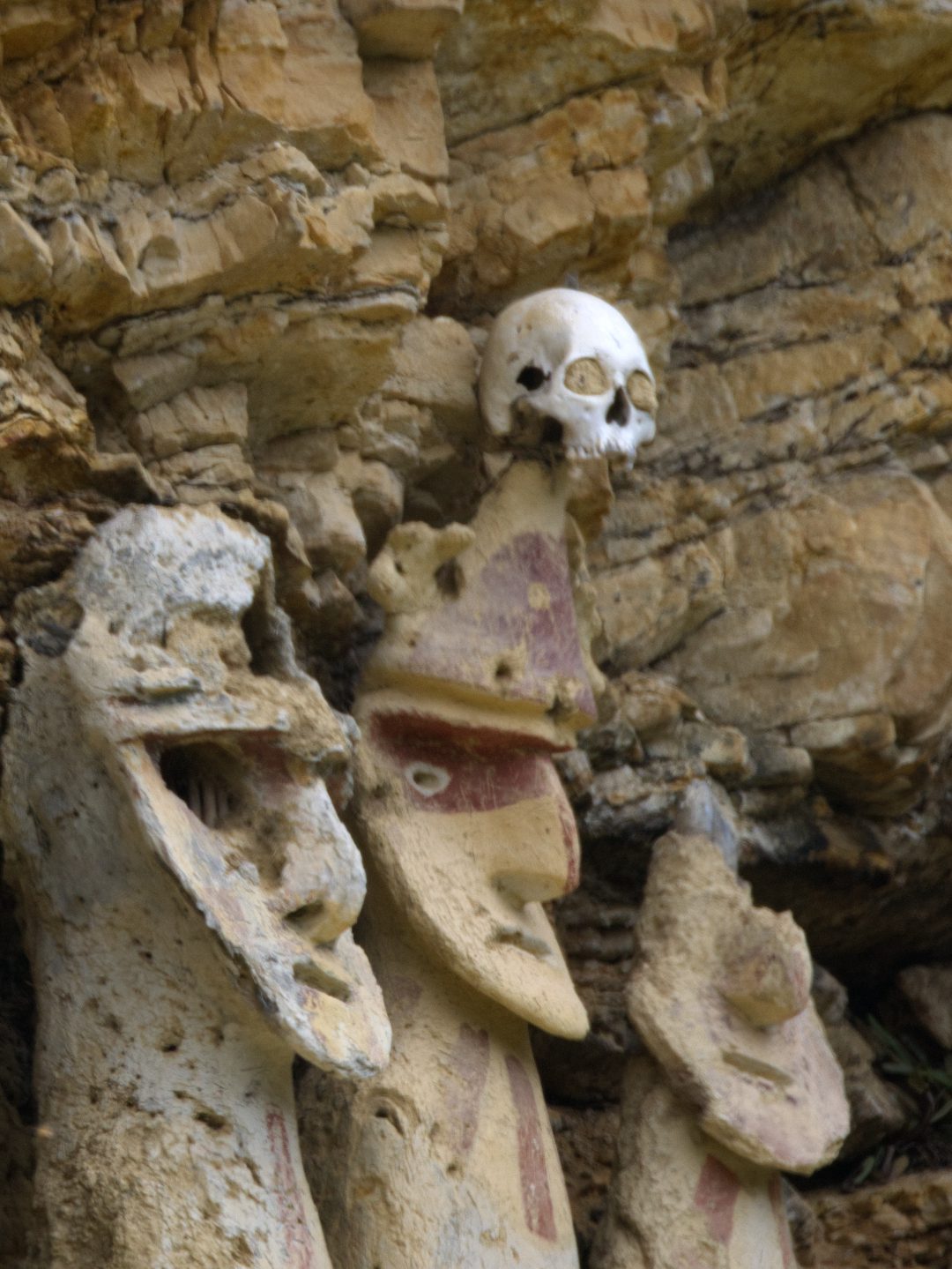
Why do some sarcophagi have skulls on top?
Several of the sarcophagi at Karajía feature a human skull placed atop the structure.
Local interpretation commonly associates these skulls with leadership, hierarchy, or ancestral authority. Across Andean cultures, skulls are often linked not to violence, but to lineage, protection, and continuity.
Rather than decoration, these elements are understood as symbolic markers of status and role within the community.
Are there differences between male and female sarcophagi?
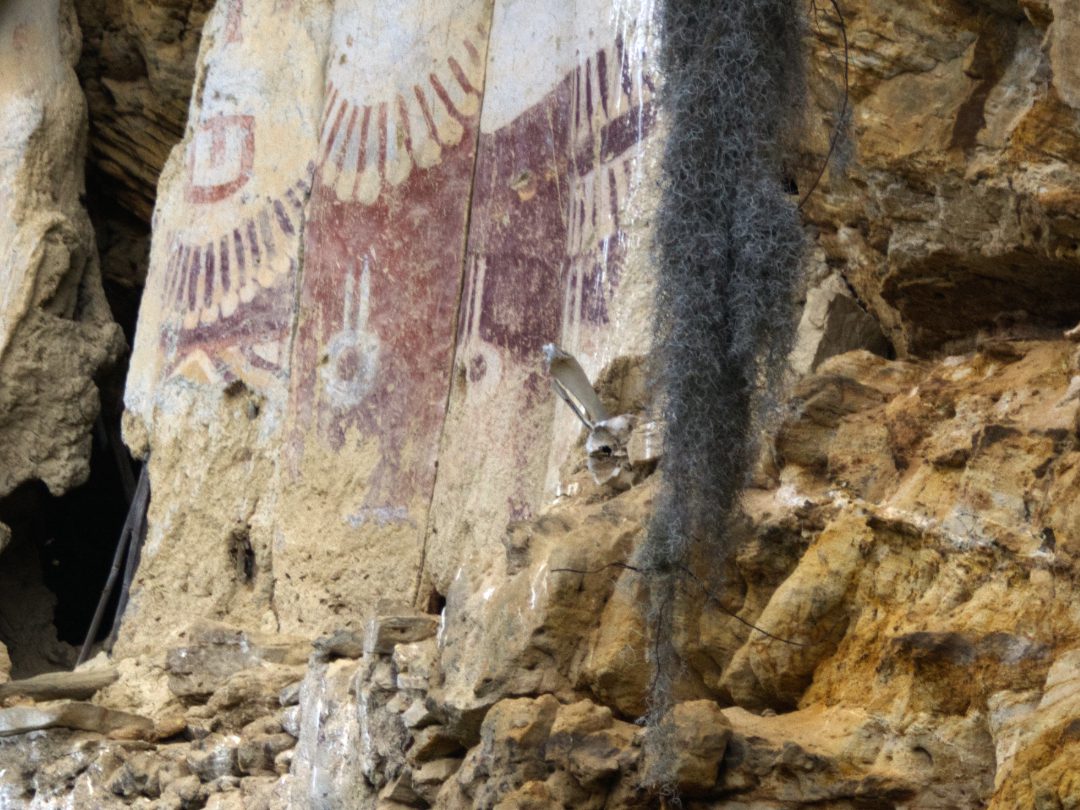
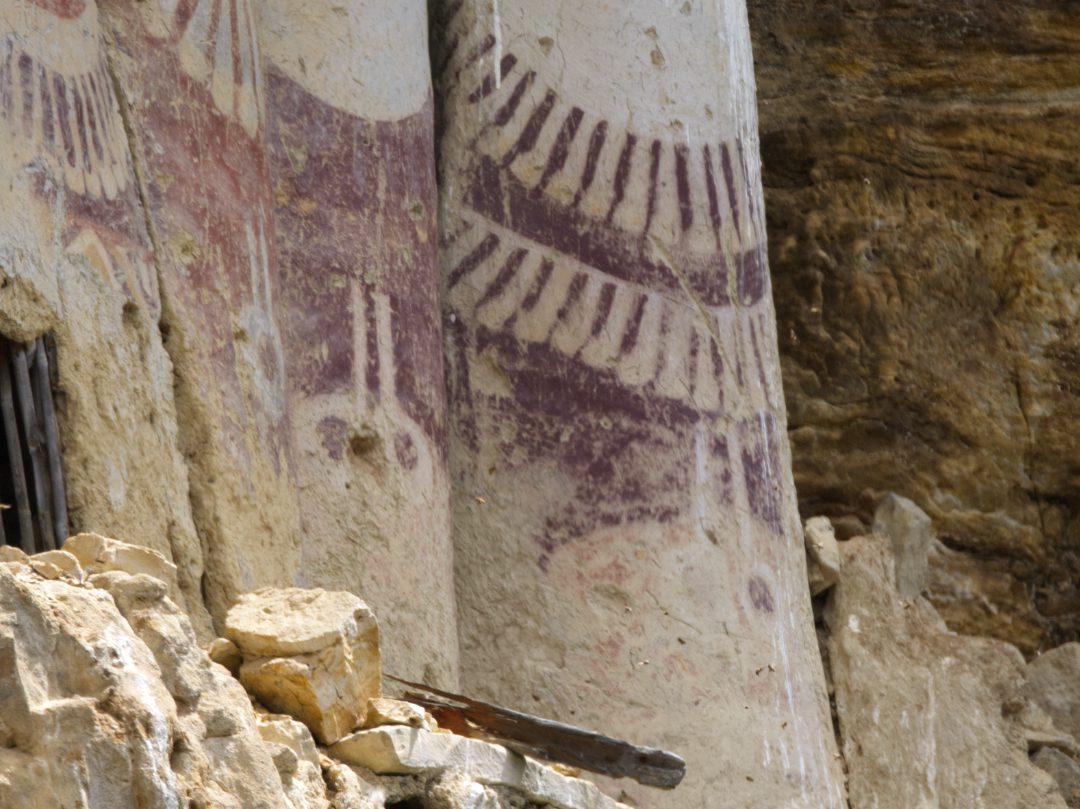
Some sarcophagi display painted markings near the lower portion of the body that local guides interpret as indicators of sex.
Females show a single circle with two parallel lines, possibly representing the uterus. Males, on the other hand, show two circles, likely testicles.
We also learned in Leymebamba, that certain styles of painted faces are likely gendered. Not all sarcophagi preserve these details clearly, and some markings are difficult to distinguish from a distance.
Why are some figures hard to see?
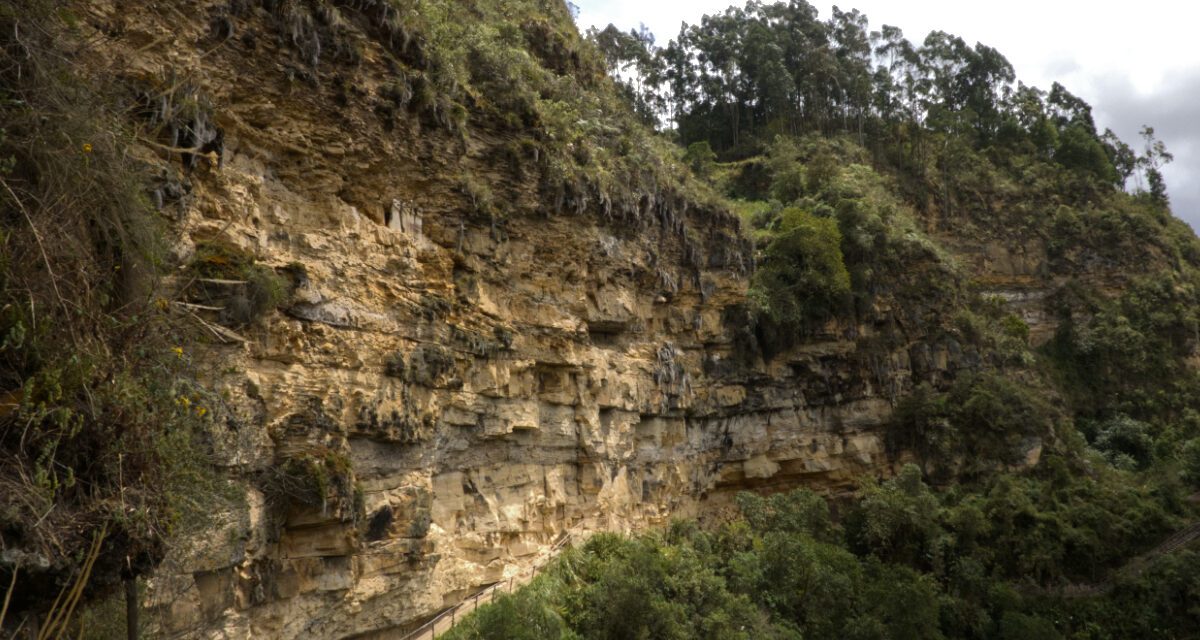
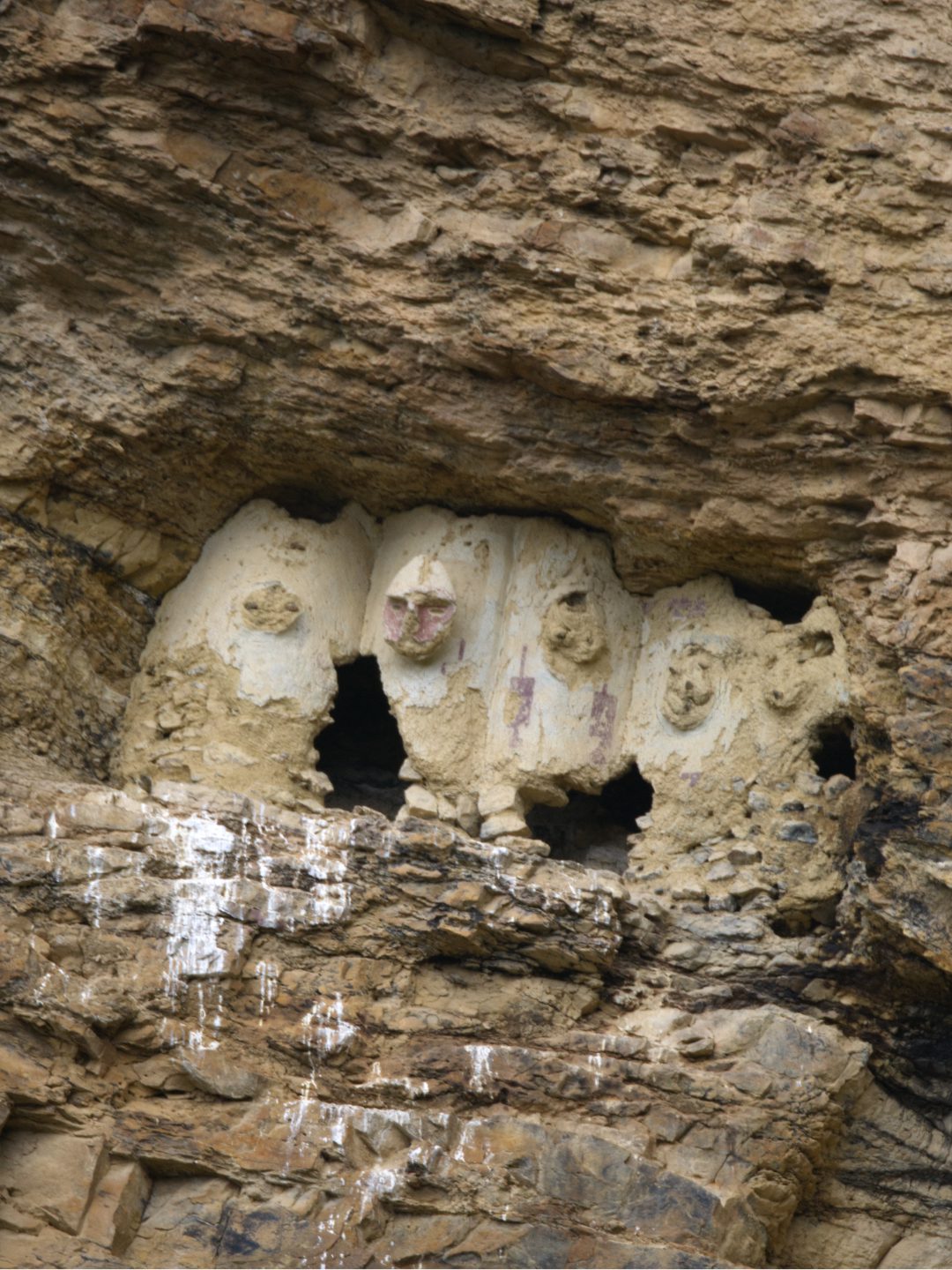
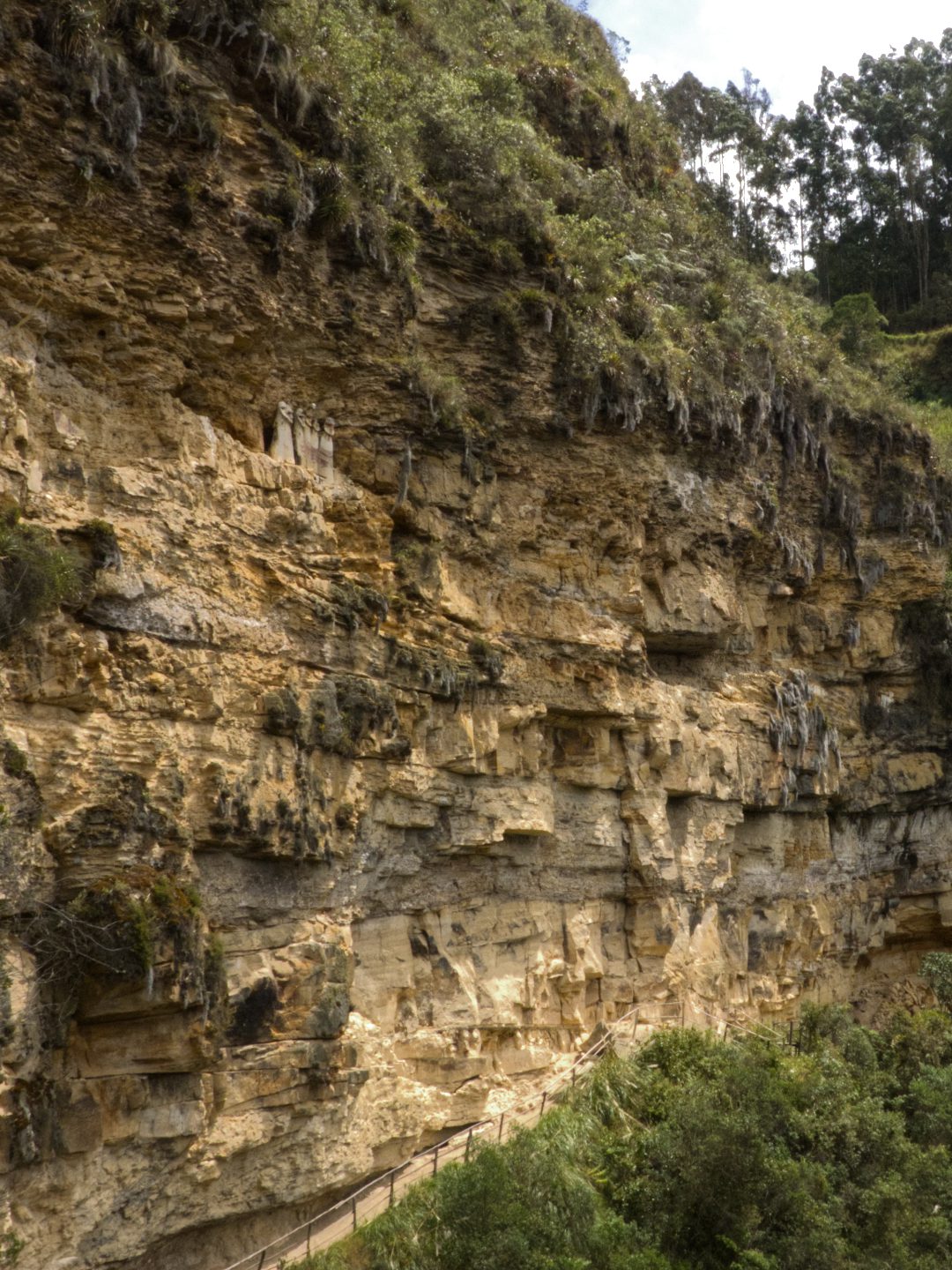
Many sarcophagi are found in less obvious locations—tucked into natural niches or positioned where they blend into the cliff face.
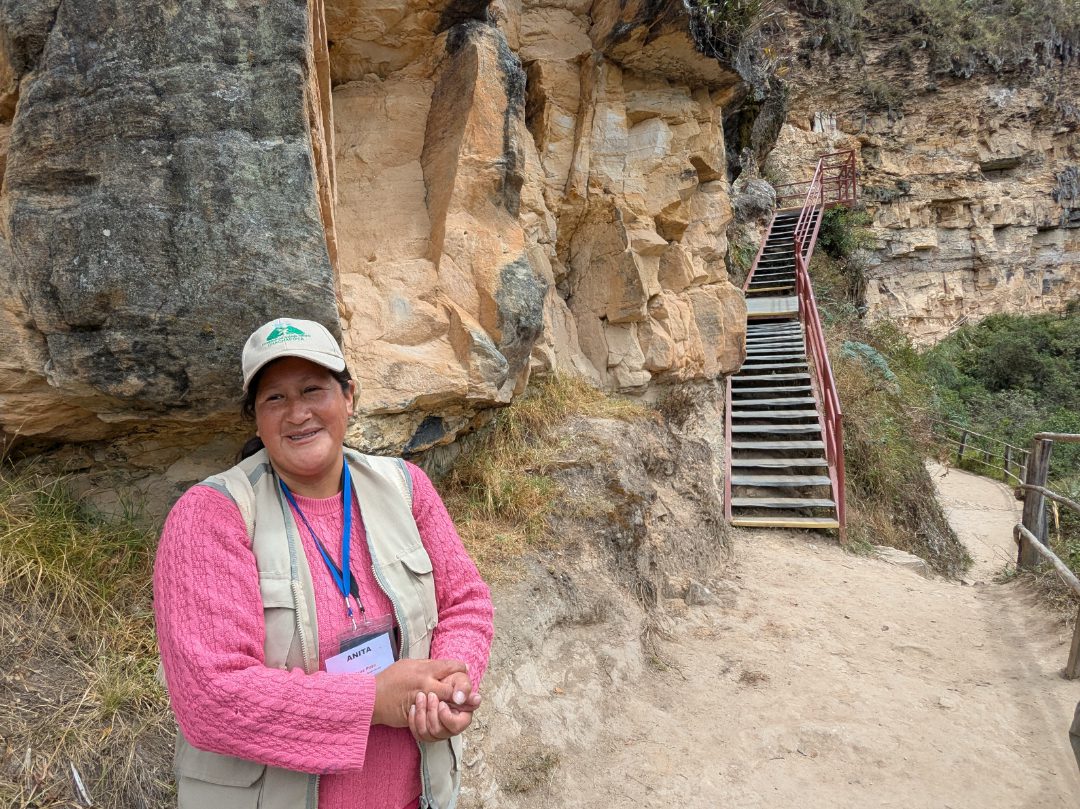
Visitors without binoculars or a local guide often miss these figures entirely. In fact, we completely credit our excellent guide, Anita Ventura, with making our experience more complete with her ability to guide our eyes to very hard to find figures on the cliffside.
Can the sarcophagi be moved or better protected elsewhere?
The local community strongly opposes removing the sarcophagi from their original location.
For residents of nearby communities such as Cruz Pata, the sarcophagi are not artifacts detached from place—they are ancestors, and Karajía is their resting ground. Removing them would strip the site of its meaning and undermine community-based tourism.
Preservation efforts therefore focus on protection in place, rather than relocation.
Is Karajía still important to the local community?
Yes—very much so.
Karajía is considered a sacred place, not simply a tourist attraction. It holds cultural, historical, and spiritual significance for the surrounding communities, and access is managed with care and respect.
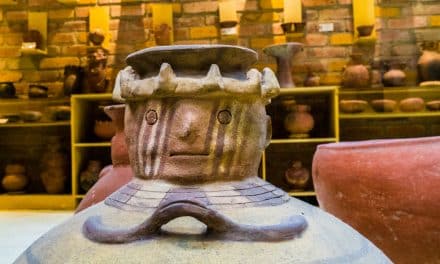
While visiting Cruz Pata, you should take the time to enter the small museum. While it holds only a few artifacts, they are intriguing to see.
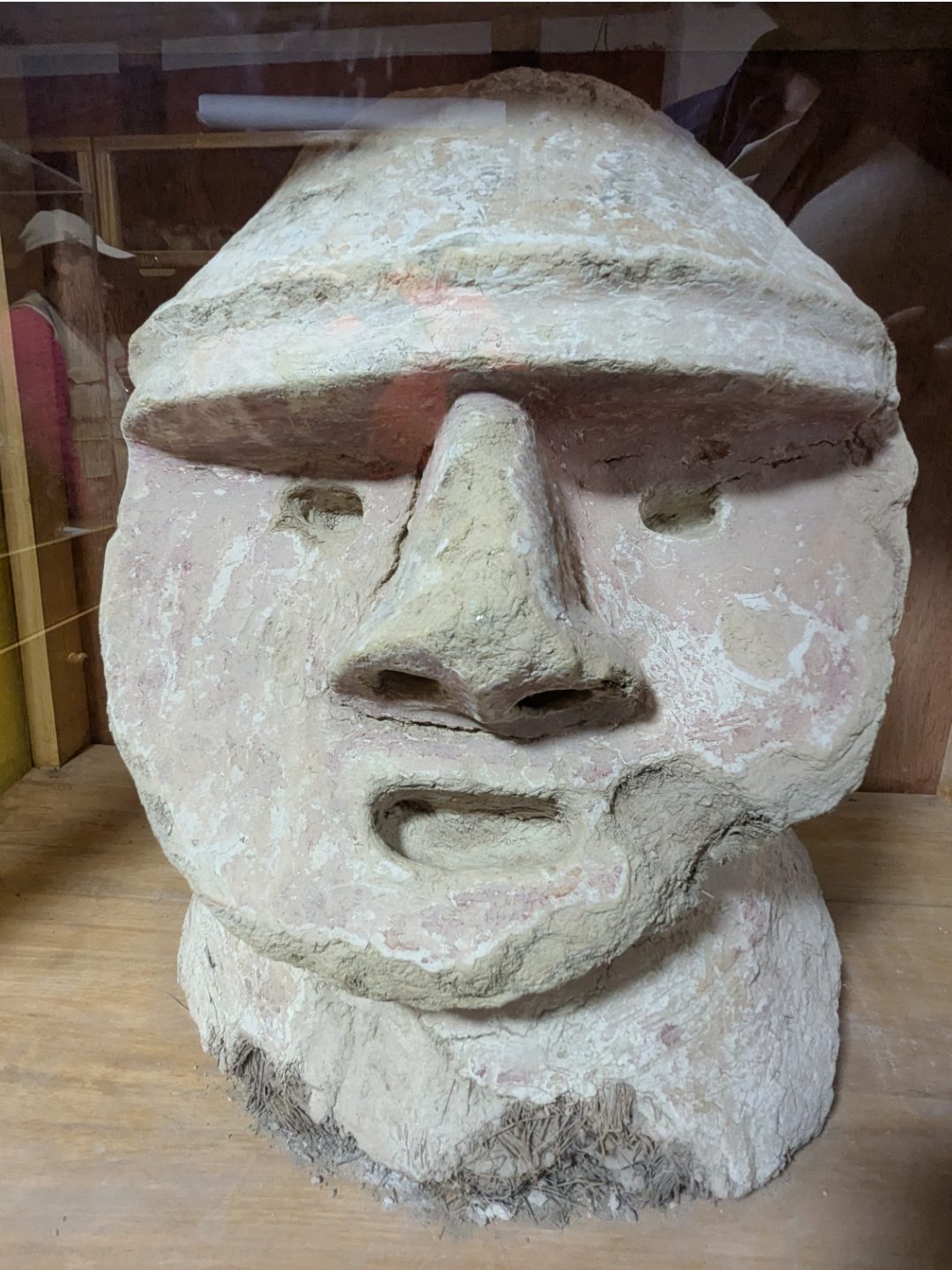
Do you need a local guide to visit Karajía?
A guide is not legally required, but the experience is profoundly better with one. A local guide:
- helps visitors understand what they are seeing
- points out remains that are otherwise invisible
- explains community perspectives
- supports local livelihoods
Karajía is best understood not as something to “check off,” but as a destination shared with those who know it best.
What is the best way to visit Karajía?
There are a few ways to visit Karajía, and the “best” option depends on how much time you have and the kind of experience you’re looking for.
Community-based visits (recommended)
For a more meaningful experience, we recommend working with a local agency that has established relationships in the region.
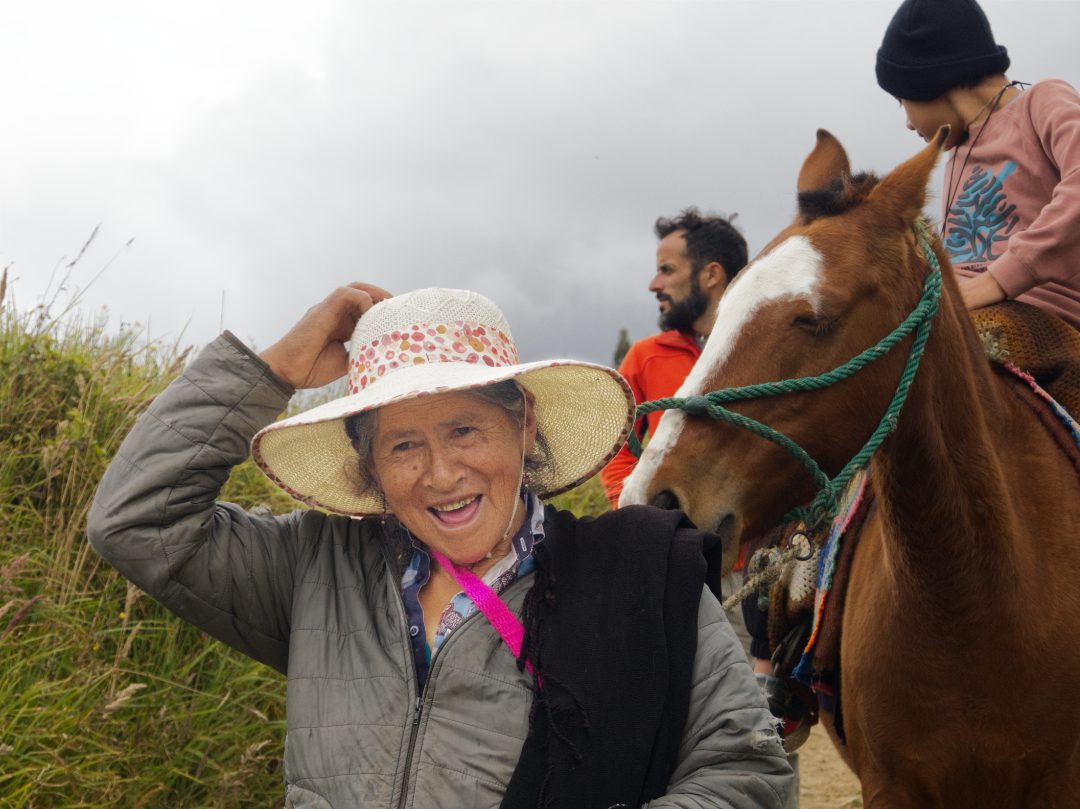
We partnered with Nuevo Caminos Travel, a locally based agency run by our friend, Marilyn, to arrange our visit. Traveling this way made it possible to spend more time at the site, learn directly from a local guide, and—when logistics allow—coordinate experiences such as meals in the community.
Working with a local agency also helps ensure that visits are respectful, well-organized, and beneficial to the people who care for Karajía.
Guided day tours (platform-based)
Some travelers choose to visit Karajía through large tour platforms such as GetYourGuide. These tours often combine Karajía with other nearby sites and can be a convenient option for visitors with limited time or who prefer a structured itinerary.
That said, these tours tend to be less immersive, with limited time on site and fewer opportunities to engage with the local community or explore beyond the main viewing platform. Choose your package carefully if you go this route.
Visiting independently
It is technically possible to reach Cruz Pata and Karajía independently by rental car or a combination of buses and walking. However, this option is not recommended for most travelers.
Transportation schedules can be unreliable, signage is limited, and visiting without a guide often means missing much of what makes Karajía meaningful—including figures that are difficult to see without local knowledge, as well as important context about the site and community expectations.
Our takeaway:
Karajía is best experienced as a destination shared with a local guide, not rushed through or treated as a quick stop. How you choose to visit shapes not only what you see, but how much you understand—and how your visit impacts the community.